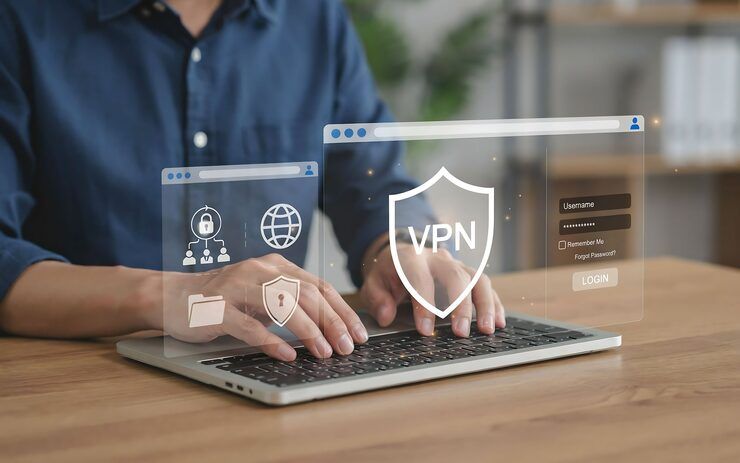
Virtual private networks (VPNs) are technologies that create encrypted connections between a device and a remote network or VPN server. They are widely used to protect data on untrusted networks, support secure remote access, and help organizations manage connections between different offices and users.
When someone connects to a VPN, compatible software establishes a protected communication channel. Internet traffic routed through that tunnel is encrypted between the device and the VPN endpoint, helping prevent people on the same local network from easily reading the transmitted data.
VPN technology is used by individuals, businesses, educational institutions, and government organizations. However, a VPN does not automatically make every online activity anonymous or protect a device from every cybersecurity threat. Its effectiveness depends on the protocol, configuration, provider, device security, and the way applications handle network traffic.
Understanding How VPN Technology Works
A conventional internet connection sends traffic through the networks involved in reaching a destination. A VPN adds an encrypted tunnel between the user's device and a VPN endpoint.
The process typically involves several steps:
The device connects to a VPN server or organizational network.
The VPN software establishes an authenticated connection.
Encryption protects traffic traveling through the tunnel.
The VPN endpoint forwards the relevant traffic toward its destination.
Responses travel back through the established connection.
A VPN can help protect information from interception on an untrusted local network, but encryption generally ends at the VPN endpoint for traffic that leaves the tunnel. Websites and other online platforms may still collect information about user activity.
Common Types of VPNs
Different VPN configurations address different networking requirements.
Remote-access VPN: Connects an individual device to a private organizational network. Employees may use this configuration to reach approved internal applications while working outside the office.
Site-to-site VPN: Connects two or more networks, such as offices in different cities, through encrypted network tunnels.
Personal VPN: Routes a user's internet traffic through a VPN provider's server, potentially reducing exposure to local network observers and changing the public IP address seen by destination websites.
Mobile VPN: Supports connectivity for devices that move between networks, depending on the implementation and configuration.
Common VPN Protocols
VPN protocols define how connections are established, authenticated, and protected.
WireGuard: A modern protocol designed around a comparatively compact codebase and contemporary cryptographic techniques.
OpenVPN: An established open-source VPN protocol that supports flexible configurations.
IKEv2/IPsec: A combination commonly used for secure network connections, including configurations designed to handle changes in connectivity.
IPsec: A suite of protocols used to protect IP communications, including many site-to-site and enterprise VPN arrangements.
The best configuration depends on compatibility, security requirements, network performance, and organizational policies.
Why VPNs Matter Today
VPN technology is an important part of modern cybersecurity because people increasingly access work systems, cloud applications, educational platforms, and personal accounts through multiple networks and devices.
Online Privacy and Data Protection
Public Wi-Fi networks in airports, hotels, cafés, and other shared locations may expose users to network-level risks. A properly configured VPN can encrypt traffic between a device and the VPN endpoint, making intercepted traffic more difficult to read.
However, HTTPS encryption, secure device settings, and strong account authentication remain essential. A VPN does not prevent phishing, malicious downloads, account compromise, or every form of online tracking.
Business Network Security
Organizations use enterprise VPN solutions to provide controlled access to internal systems. This is particularly relevant to remote employees, contractors, and teams distributed across different locations.
Business VPN configurations can support:
Encrypted connections to internal applications
Access restrictions based on user identity
Centralized network administration
Authentication and access logging
Connections between offices
Additional protection for data transmitted over untrusted networks
Organizations should also consider zero-trust network access, which evaluates identity, device condition, and access permissions rather than assuming that every connected device is trustworthy.
Understanding IP Addresses and Location
A VPN generally makes websites see the VPN server's public IP address instead of the user's original public IP address for traffic routed through that server.
This can reduce exposure of the user's network address to destination websites. However, browser settings, account activity, cookies, GPS permissions, and other signals may still reveal information about identity or location.
Recent Developments in VPN Technology
During 2025 and 2026, VPN technology continued to evolve alongside wider cybersecurity priorities, including stronger authentication, automated threat detection, cloud security, and preparations for future cryptographic changes.
Post-Quantum Cryptography Planning
Post-quantum cryptography has become an important consideration for long-term information security. Researchers are developing cryptographic methods intended to resist attacks from future quantum computers.
In 2025 and 2026, organizations continued evaluating how to update cryptographic systems and network infrastructure as standards and implementation guidance matured.
VPN administrators should monitor protocol support and vendor security announcements rather than assume that every VPN automatically provides post-quantum protection.
VPN and Zero-Trust Security
Many organizations are reviewing traditional network-access models alongside zero-trust architecture. Instead of granting broad access after a user connects, zero-trust approaches emphasize verifying identities, limiting permissions, and continually assessing risk.
VPNs can remain part of this architecture, but some organizations use application-specific access controls or zero-trust network access for particular workloads.
Increased Attention to Provider Transparency
Privacy policies, independent security assessments, software updates, and incident disclosures have become important factors when evaluating VPN providers.
A provider's claims about encryption or privacy should be assessed alongside its technical documentation, logging practices, ownership, jurisdiction, and history of security incidents.
Laws, Regulations, and VPN Policies
VPN regulations differ by country. Requirements may address data retention, lawful access, cybersecurity reporting, privacy, and the operation of network infrastructure.
VPN Regulations in India
India's cybersecurity framework includes directions issued by the Indian Computer Emergency Response Team (CERT-In) on April 28, 2022.
These directions include requirements for specified categories of entities, including VPN service providers covered by the rules, to maintain certain customer information and records for a prescribed period. The framework also includes incident-reporting requirements for covered entities.
The requirements have affected how some commercial VPN providers operate in India, including decisions about local server infrastructure. Applicability depends on the organization and the particular regulatory provisions.
Users and businesses should review current official guidance and obtain qualified legal advice when assessing compliance obligations.
Privacy and Data Protection in Europe
The European Union's General Data Protection Regulation (GDPR) establishes requirements for processing personal data by organizations within its scope.
A VPN provider that processes personal information may have obligations concerning transparency, lawful processing, security, and individuals' data rights. Using a VPN does not automatically make a user or provider exempt from applicable privacy laws.
United States Cybersecurity Considerations
In the United States, VPN operations can be affected by federal and state privacy requirements, sector-specific security rules, and lawful government processes.
Organizations handling sensitive information should consider applicable regulatory obligations alongside technical safeguards, including encryption, access controls, incident response, and audit procedures.
Responsible and Lawful VPN Use
VPN technology has legitimate privacy, business, and security applications. However, it does not make illegal activities lawful or guarantee that activity cannot be traced.
Users should understand the applicable rules in their location and follow the terms of the networks and systems they access.
Tools and Resources for VPN Security
Several technical resources can help individuals and organizations evaluate VPN configurations and improve network security.
VPN Provider Evaluation Checklist
Before choosing a VPN, examine:
Supported protocols and encryption standards
Independent security assessments
Data retention and privacy policies
DNS and IP leak protection
Multi-factor authentication support
Software update frequency
Connection reliability and performance
Jurisdiction and applicable legal obligations
Clear procedures for reporting security incidents
Avoid relying solely on marketing statements or claims that a VPN provides complete anonymity.
Network Testing Tools
Network diagnostic tools can help evaluate a VPN connection.
IP address checking: Identifies the public IP address visible to a destination.
DNS leak testing: Checks whether DNS requests appear to use unexpected resolvers.
Connection speed testing: Measures latency, download speed, and upload speed.
Packet analysis: Helps authorized network administrators inspect traffic behavior and diagnose connection issues.
Security audit tools: Assess software configurations and network weaknesses within authorized environments.
Testing results can vary by device, network, and VPN configuration.
Cybersecurity Guidance
The National Institute of Standards and Technology (NIST) publishes cybersecurity guidance covering cryptography, identity management, network security, and zero-trust architecture.
CERT-In provides cybersecurity advisories and regulatory information relevant to organizations operating in India. The Cybersecurity and Infrastructure Security Agency (CISA) publishes guidance on secure remote access, authentication, and network defense.
These resources can help organizations develop security policies based on documented practices rather than assumptions about VPN protection.
Frequently Asked Questions
What is a virtual private network?
A virtual private network creates an encrypted connection between a device and a VPN endpoint. It can protect traffic in transit and support secure remote access to private networks.
Does a VPN provide complete online anonymity?
No. A VPN can hide the user's original public IP address from destination websites for routed traffic, but accounts, cookies, browser fingerprints, GPS permissions, and other information may still identify or track a user.
Are VPNs legal in every country?
No. Laws and restrictions differ between jurisdictions. Some countries regulate VPN providers or restrict certain uses. Users should check current local requirements before connecting.
Can a VPN protect against malware and phishing?
A VPN alone does not provide comprehensive protection against malware or phishing. Updated software, reputable security tools, secure browsing practices, and multi-factor authentication remain important.
How should a business evaluate an enterprise VPN?
A business should assess encryption, authentication, access controls, logging, network compatibility, performance, vendor transparency, and regulatory obligations. It should also consider whether a VPN, zero-trust network access, or a combination of approaches best fits its security requirements.
Conclusion
Virtual private networks are an important component of modern network security. They can encrypt traffic between devices and VPN endpoints, support remote access, and reduce exposure of public IP addresses to destination websites.
However, VPN technology is not a complete privacy or cybersecurity solution. Its effectiveness depends on secure configuration, trustworthy software, appropriate access controls, and an understanding of what the encrypted connection does and does not protect.
Developments in post-quantum cryptography, zero-trust architecture, and provider transparency show why VPN users and administrators need to review their security practices regularly. By evaluating technical capabilities, checking current regulations, and combining VPN protection with broader cybersecurity measures, individuals and organizations can make more informed decisions about secure internet connectivity.