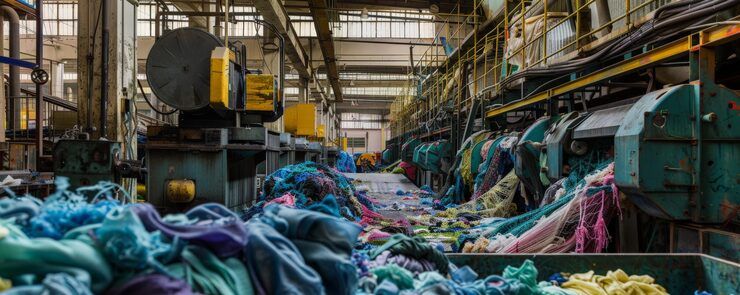
Textile recycling machines are industrial systems designed to process discarded fabrics, clothing, production scraps, and other textile materials into reusable fibers or materials suitable for further manufacturing. These machines help manage textile waste generated by clothing production, household textiles, upholstery manufacturing, and other industries.
Textiles contain different fibers, including cotton, polyester, wool, nylon, and blended materials. Each material has different physical and chemical properties, which influence how it can be recycled. Some fabrics can be mechanically processed into fibers, while others require chemical treatment or specialized separation methods.
Textile recycling technology helps reduce waste, recover useful raw materials, and support more efficient material use. The appropriate equipment depends on the composition of the incoming textiles, contamination levels, required output quality, and intended application of the recovered fibers.
Understanding Textile Recycling Equipment
A textile recycling facility may use several machines to prepare, separate, and process discarded fabrics. Some systems focus on sorting and cutting, while others are designed to open fabrics into individual fibers or recover materials from complex textile products.
Common types of textile recycling machines include:
Textile shredders: Cut fabrics and textile waste into smaller pieces.
Fabric cutting machines: Prepare textiles for subsequent processing.
Fiber opening machines: Separate fabric structures into reusable fibers.
Textile sorting systems: Identify and separate materials by fiber type, color, or composition.
Carding machines: Align and separate fibers during preparation for further textile processing.
Dust extraction systems: Collect airborne fibers and dust generated during processing.
Baling machines: Compress prepared textile waste for storage and transportation.
Chemical recycling equipment: Processes suitable textile materials into recovered chemical building blocks.
Not every recycling facility needs all these machines. Equipment selection depends on whether the objective is to prepare fabric scraps, recover fibers, separate blended textiles, or produce material for another manufacturing process.
How Textile Recycling Works
Textile recycling generally begins with collection and sorting. Incoming materials are inspected to identify fiber composition, contamination, accessories, and other components that may interfere with processing.
The main processing stages can include:
Collection and inspection: Textiles are examined for composition, condition, and contaminants such as buttons, zippers, coatings, and attached materials.
Sorting: Fabrics are separated by fiber type, color, construction, or intended processing method.
Cutting and shredding: Large fabric pieces are reduced to manageable sizes.
Fiber opening: Mechanical equipment loosens the textile structure and separates material into smaller fiber bundles.
Cleaning and separation: Dust, unwanted components, and certain contaminants are removed where the system permits.
Quality assessment: Recovered fibers are evaluated for length, strength, cleanliness, and consistency before further use.
The resulting material may be blended with virgin fibers or other recovered fibers, depending on its quality and the requirements of the intended product.
Why Textile Recycling Machines Matter
Textile recycling machinery helps address the growing challenge of textile waste. Discarded clothing, home furnishings, industrial fabrics, and manufacturing offcuts can contain materials that remain useful when processed appropriately.
Environmental Benefits
Recovering textile materials can reduce the volume of waste sent to landfills or incineration. It can also reduce demand for some virgin raw materials, although the overall environmental benefit depends on the energy, water, chemicals, transportation, and processing requirements involved.
Textile waste management is particularly challenging when fabrics contain multiple fiber types or coatings that are difficult to separate.
Industrial Applications
Recycled textile fibers can be used in several applications, depending on their characteristics:
Nonwoven fabrics
Insulation materials
Automotive interior components
Upholstery fillings
Cleaning textiles
Industrial padding
Selected yarns and woven fabrics
Composite materials
Shorter mechanically recovered fibers may be less suitable for producing fine yarns without blending or additional processing. Material testing is therefore important when determining the best application.
Operational Efficiency
Automated sorting, controlled feeding, and integrated processing systems can improve material consistency and reduce unnecessary handling. However, actual productivity depends on textile composition, machine configuration, maintenance, and the quality of incoming material.
Recent Developments in Textile Recycling Technology
During 2025 and 2026, textile recycling research and industrial development continued to focus on automated sorting, fiber-to-fiber recycling, blended fabric separation, and improved material recovery.
European Textile Waste Rules
On September 26, 2025, the European Commission announced the adoption of new measures under the revised Waste Framework Directive to address textile and footwear waste. The revised framework establishes requirements for separate textile collection and introduces extended producer responsibility measures for textiles across European Union member states.
These measures increase the importance of collection, sorting, preparation, and recycling infrastructure. Their detailed implementation depends on national legislation and applicable transition periods.
Automated Textile Sorting
Automated textile sorting systems increasingly combine optical sensors, near-infrared spectroscopy, image recognition, and artificial intelligence to identify materials.
These technologies can help distinguish certain fiber types and separate suitable materials before recycling. Their accuracy depends on factors such as fabric construction, dyes, surface treatments, mixed fibers, and the available training data.
Advances in Fiber-to-Fiber Recycling
Fiber-to-fiber recycling aims to recover textile material that can be used to produce new fibers rather than directing all recovered textiles toward lower-grade applications.
Mechanical methods are commonly used for suitable natural and synthetic textiles, while chemical recycling research focuses on recovering selected polymers or chemical building blocks from compatible materials.
Blended fabrics remain a major technical challenge because separating cotton from polyester or other fiber combinations can require additional processing.
Laws, Regulations, and Environmental Policies
Textile recycling facilities must consider waste management, environmental protection, occupational safety, and industrial operating requirements. The relevant rules depend on the country, state, and municipality where a facility operates.
Textile Waste Regulations in the European Union
The European Union's revised Waste Framework Directive introduces an expanded policy framework for textile and footwear waste.
Extended producer responsibility systems are intended to make producers contribute to the management of products at the end of their useful life. National authorities determine how these obligations are implemented under applicable legislation.
Businesses operating in the European market should review current requirements concerning textile collection, sorting, waste classification, recycling targets where applicable, and producer responsibilities.
Textile Waste Management in India
In India, textile recycling facilities may be subject to state pollution-control requirements, local waste-management rules, factory safety provisions, and environmental regulations applicable to their activities.
The specific obligations depend on the material being processed, the facility's location, its emissions and wastewater profile, and whether chemical treatment is involved.
Facilities should consult the relevant State Pollution Control Board and applicable central environmental regulations before establishing or modifying industrial operations.
Workplace and Environmental Safety
Textile recycling machinery can create hazards involving rotating components, sharp cutting elements, airborne fibers, dust, noise, and material handling.
Appropriate controls can include machine guards, emergency-stop systems, ventilation, dust extraction, safe material-feeding procedures, fire prevention, and routine equipment inspection.
Chemical recycling processes may require additional controls for chemical handling, wastewater treatment, emissions, and worker exposure.
Tools and Resources for Textile Recycling
Technical resources can help organizations evaluate equipment, understand fiber composition, and plan compliance.
Government and Industry Resources
European Commission: Information on EU waste legislation, textile policy, and circular-economy initiatives.
Central Pollution Control Board, India: Environmental guidance and regulatory information relevant to industrial waste management.
State Pollution Control Boards: Local requirements for facility approvals, emissions, wastewater, and waste handling.
Textile research institutes: Information on fiber testing, textile processing, recycled material quality, and recycling technologies.
Equipment technical documentation: Specifications covering throughput, power consumption, maintenance, safety, and material compatibility.
Equipment Evaluation Checklist
| Evaluation Factor | Information to Record |
|---|---|
| Input material | Cotton, polyester, wool, blends, or mixed textiles |
| Processing capacity | Required kilograms or tonnes per hour |
| Output material | Opened fibers, fabric fragments, or recovered polymers |
| Fiber quality | Length, strength, cleanliness, and consistency |
| Sorting requirements | Color and fiber-composition separation |
| Energy requirements | Electricity consumption and operating demand |
| Dust management | Ventilation and fiber collection |
| Compliance | Environmental permits and safety requirements |
| Maintenance | Blade condition, cleaning, and inspection intervals |
A spreadsheet can help compare equipment specifications and calculate energy consumption per tonne using measured electricity usage and actual throughput. Estimates should be validated against operating data rather than relying solely on advertised machine capacity.
Frequently Asked Questions
What are textile recycling machines used for?
They process discarded fabrics, clothing, production scraps, and other textile materials into reusable fibers, fragments, or recovered chemical materials. The final output depends on the textile composition and recycling method.
What is the difference between textile shredding and fiber opening?
Shredding cuts textile materials into smaller pieces. Fiber opening goes further by loosening the textile structure and separating it into fibers or fiber bundles that may be suitable for additional processing.
Can blended fabrics be recycled?
Yes, but recycling blended fabrics can be more complicated than processing a single fiber type. Mechanical processing may recover mixed fibers, while certain chemical methods can separate compatible components. The appropriate method depends on the blend and the intended output.
Which industries use recycled textile fibers?
Applications include nonwoven manufacturing, insulation, automotive interiors, upholstery fillings, industrial padding, and selected yarn and fabric production. Suitability depends on fiber quality, cleanliness, strength, and consistency.
What regulations apply to textile recycling facilities?
Requirements vary by location and process. They may cover industrial waste management, air emissions, wastewater, chemical handling, worker safety, fire protection, and extended producer responsibility obligations.
Conclusion
Textile recycling machines help recover useful materials from discarded fabrics, clothing, and industrial textiles. Shredders, sorting systems, fiber opening machines, and specialized chemical processing equipment support different stages of textile waste recovery.
Recent developments in textile waste legislation, automated sorting, and fiber-to-fiber recycling demonstrate increasing attention to textile circularity and material recovery. However, the effectiveness of each method depends on the composition of the incoming textiles, the quality of the recovered material, and the environmental requirements of the process.
Selecting appropriate equipment requires careful assessment of feedstock, processing capacity, fiber quality, energy consumption, dust management, maintenance, and local regulations. With effective sorting, suitable technology, and reliable quality control, textile recycling can contribute to more responsible material use and improved management of textile waste.