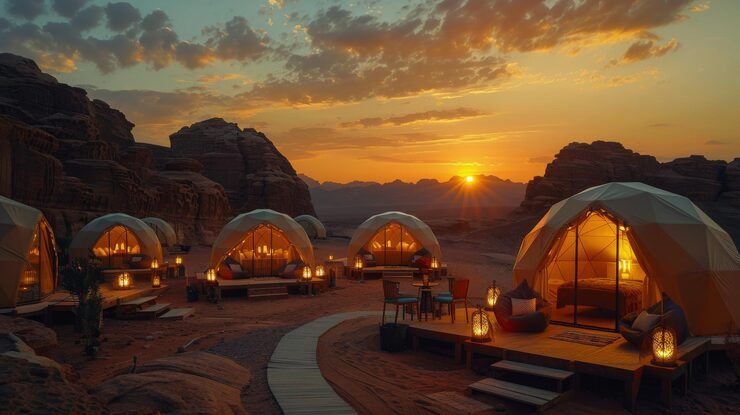
Desert dome camps are accommodation concepts that use dome-shaped structures as temporary or semi-permanent lodging in arid landscapes. They combine elements of camping, architecture, nature tourism, and modern hospitality while placing travelers directly within desert environments.
A dome can be constructed from different materials, including insulated fabric, geodesic frameworks, composite panels, or other lightweight building systems. The shape can provide an efficient structural form while creating a distinctive interior environment.
Desert dome accommodation has become associated with glamping, a form of outdoor travel that combines camping environments with more structured accommodation. These properties can range from simple insulated domes to sophisticated units containing bedrooms, bathrooms, climate-control systems, viewing windows, and private outdoor areas.
The United Arab Emirates provides an important example of desert tourism because large areas of the country consist of arid landscapes and protected desert environments. Dubai, Abu Dhabi, and other emirates have developed tourism activities around dunes, wildlife, astronomy, cultural heritage, and overnight desert accommodation.
How Desert Domes Are Designed
A desert dome must respond to extreme environmental conditions. Daytime temperatures can become very high, while nighttime temperatures may fall substantially, particularly during the cooler season.
Important design factors include:
Solar heat gain
Insulation
Ventilation
Air conditioning
Wind resistance
Sand accumulation
Structural stability
Water management
Lighting
Fire safety
Emergency access
The dome shape can reduce the amount of external surface exposed to direct solar radiation compared with some conventional building forms, but insulation, orientation, glazing, ventilation, and mechanical cooling remain important.
| Design element | Main purpose | Key consideration |
|---|---|---|
| Dome frame | Structural support | Wind and stability |
| Insulation | Reduce heat transfer | Desert temperature |
| Windows | Views and daylight | Solar heat gain |
| Ventilation | Indoor air quality | Dust and temperature |
| Cooling system | Interior comfort | Energy consumption |
| Foundation | Secure the structure | Sand and ground conditions |
| Exterior lighting | Safety and visibility | Wildlife and night-sky impact |
Why Desert Dome Camps Matter Today
Desert dome camps are part of the broader growth of nature-based tourism and experiential travel. They allow visitors to spend more time within desert landscapes instead of simply visiting the dunes during a short excursion.
This can be particularly relevant to travelers researching:
Luxury travel
Glamping accommodation
Desert vacations
Adventure tourism
UAE travel
Premium hotel accommodation
Nature tourism
Sustainable tourism
Astronomy travel
Cultural travel
Extending the Desert Experience
A conventional desert excursion may last only a few hours. Overnight dome accommodation creates opportunities to experience different parts of the desert environment, including sunset, nighttime temperatures, early-morning landscapes, and the night sky.
Activities can include:
Stargazing
Guided nature walks
Dune exploration
Wildlife observation
Cultural demonstrations
Photography
Astronomy programs
Outdoor dining
Traditional desert activities
The exact activities depend on the destination and applicable environmental rules.
Comfort in an Extreme Climate
Dome accommodation also illustrates the challenge of combining outdoor tourism with indoor comfort.
A successful desert lodging design needs to manage temperature, humidity, dust, insects, water, and electricity while maintaining a connection with the surrounding landscape.
This makes dome camps relevant to architectural research as well as travel planning.
Environmental Considerations
Desert ecosystems may appear empty, but they support specialized plants, insects, reptiles, birds, mammals, and microorganisms.
Development can affect:
Wildlife movement
Vegetation
Soil and sand surfaces
Natural drainage
Nighttime conditions
Waste management
Noise levels
Responsible desert tourism therefore requires careful site selection and appropriate management of visitor activity.
Recent Developments in Desert Tourism
The UAE continues to develop its tourism sector while placing increasing attention on nature, protected areas, sustainability, and organized outdoor recreation.
UAE Tourism and Nature-Based Travel in 2026
The official UAE government tourism platform, updated in January 2026, highlights the country's deserts, oases, mountains, valleys, salt plains, beaches, and protected natural environments as part of its tourism landscape. It also identifies desert camping and wildlife experiences among ways visitors can explore the country's natural environment.
This broader focus supports the continued development of accommodation concepts that connect visitors with natural landscapes.
Dubai Desert Camping Season
Dubai's official tourism guidance identifies October through April as the main camping season because of the cooler weather. Its January 2025 camping guide also highlights locations such as Lahbab and Hatta and provides practical safety guidance for outdoor camping.
This seasonal pattern is particularly relevant to dome accommodation because temperature management becomes more demanding during the hotter months.
Protected Desert Areas
Dubai's protected-area program continues to support nature tourism. The Marmoom Desert Conservation Reserve includes visitor opportunities focused on wildlife, bird observation, and nature experiences. Dubai Municipality provides information about access and registration for visitors.
The existence of protected areas demonstrates why dome camps must be planned according to the environmental status of the land rather than treating all desert areas as available development locations.
Growing Interest in Desert Experiences
The UAE's tourism infrastructure supports a wide range of outdoor experiences, from desert safaris to wildlife observation and camping. This creates an environment in which dome accommodation can complement broader tourism activities while requiring careful environmental and regulatory planning.
Laws, Regulations and Policies in the UAE
The UAE is a federation, so tourism and land-use rules can differ between emirates. Dubai provides a useful regulatory example because it has detailed municipal requirements for desert tourism camps and outdoor camping.
Desert Tourism Camp Requirements in Dubai
Dubai Municipality's technical guidelines include a specific Technical Guideline for Desert Tourist Camps, indicating that organized desert tourism camps are subject to health and safety requirements.
Dubai Municipality also states that establishing a temporary desert camp requires a No Objection Certificate from the Department of Tourism and Commerce Marketing before the relevant desert tourism camp rental contract can be renewed.
This is important for dome-camp operators because a temporary accommodation structure in the desert may fall under tourism, land-use, safety, and municipal requirements.
Temporary Winter Camping
Dubai Municipality's winter-camping program provides another example of regulated outdoor accommodation.
For the 2024–2025 winter season, Dubai Municipality announced permits, designated camping boundaries, health and safety requirements, fire precautions, and restrictions on certain activities. The program operated from October 21, 2024, through the end of April 2025.
The municipality required campers to maintain site cleanliness, follow fire-safety measures, keep fire extinguishers available, and avoid fireworks. It also established limits for sand-bike movement within the designated camping area.
Environmental Protection
The UAE has a federal environmental framework designed to protect environmental quality, natural resources, and biodiversity. Federal Law No. 24 of 1999 is identified by the UAE government as a foundation of the country's environmental protection policy.
For desert accommodation, environmental planning can involve:
Protected-area restrictions
Wildlife protection
Waste management
Vegetation protection
Site disturbance
Noise
Lighting
Water management
A proposed dome camp should therefore be evaluated according to its specific location and the requirements of the relevant emirate and authority.
Tools and Resources for Desert Dome Travel
Travelers and accommodation planners can use several tools to research desert dome experiences.
Weather and Desert Conditions
Useful resources include:
Desert weather applications
Temperature forecasts
Wind forecasts
UV-index tools
Sunrise and sunset calculators
Moon-phase applications
Astronomy and stargazing tools
Weather information is especially important because desert conditions can change rapidly.
Navigation and Transportation
Useful tools include:
Digital mapping applications
GPS navigation
Road-condition information
Airport transfer planners
Vehicle-route planning tools
Official tourism applications
The UAE government lists official tourism applications for destinations including Dubai and Abu Dhabi, as well as an Eco Tourism UAE application.
Environmental Research
Before visiting a desert area, travelers can consult:
Protected-area information
Official tourism websites
Municipal camping guidance
Wildlife information
National environmental resources
Local weather data
Dubai Municipality also provides public information about protected desert areas such as the Marmoom Desert Conservation Reserve.
Practical Packing Checklist
A desert dome trip may require:
Lightweight daytime clothing
Warm layers for cooler evenings
Closed footwear
Sun protection
Reusable water container
Personal medication
Portable charging equipment
Camera equipment
Travel insurance documentation
Visitors should also follow the specific property's guidance concerning outdoor activities and nighttime conditions.
Frequently Asked Questions
What is a desert dome camp?
A desert dome camp is accommodation based around dome-shaped structures placed within an arid landscape. The structures can range from simple insulated tents to more developed units with bedrooms, bathrooms, climate control, and other facilities.
Are desert dome camps available in the UAE?
Yes. The UAE has a well-developed desert tourism sector that includes camping and nature-based accommodation. Dubai and other emirates have desert destinations where visitors can experience dunes, wildlife, astronomy, and outdoor activities.
When is the best time for a desert dome stay in the UAE?
The cooler months are generally more suitable for outdoor desert activities. Dubai's official tourism guidance identifies October through April as the main camping season.
Are desert dome camps environmentally sustainable?
Not automatically. Environmental performance depends on site selection, energy consumption, water use, waste management, construction materials, lighting, transportation, and effects on wildlife and vegetation.
Do desert camps require permits in Dubai?
Requirements depend on the type and location of the camp. Dubai has specific rules for desert tourism camps and temporary winter camps, and organized camps can require approvals or permits from relevant authorities.
Conclusion
Desert dome camps combine outdoor tourism with modern accommodation, creating a distinctive way to experience arid landscapes. Their appeal comes from the balance between being surrounded by desert scenery and having a controlled indoor environment.
The UAE provides a strong example of this tourism concept because desert landscapes form a major part of the country's natural environment and tourism identity. Official UAE tourism information recognizes desert camping, wildlife observation, and protected natural areas as important elements of nature-based travel.
Dubai's regulatory framework demonstrates that desert accommodation must also be approached carefully. Desert tourism camps can be subject to municipal safety guidelines and tourism-related approvals, while environmental legislation provides broader protection for natural resources and biodiversity.
For travelers, the cooler season, particularly from October through April, can provide more suitable conditions for outdoor desert activities. Weather, transportation, accessibility, emergency arrangements, and environmental policies should be reviewed before planning a stay.
For the hospitality industry, dome camps demonstrate how architecture can respond to extreme climates while creating distinctive nature-based accommodation. Their long-term development will depend on responsible land use, efficient resource management, guest safety, and protection of the fragile desert environments that make these destinations attractive.