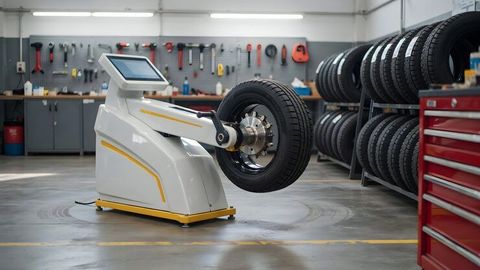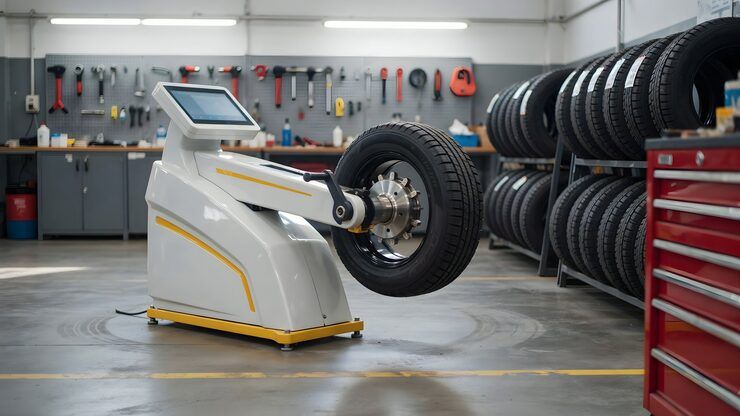
Tyre buffing machines are specialized industrial machines used to remove a controlled layer of rubber from a tyre's surface. They are particularly important in tyre retreading, a process that prepares a suitable used tyre casing to receive a new tread.
Tyre retreading can extend the useful life of certain tyre casings by replacing worn tread material while retaining the structurally sound casing. Buffing is a key preparation stage because the surface must have an appropriate profile for the bonding materials and new tread to adhere correctly.
These machines are used in commercial tyre retreading facilities, truck and bus tyre plants, industrial tyre operations, and selected tyre repair environments. Their design varies according to tyre dimensions, casing type, required surface profile, production capacity, and the retreading method being used.
Understanding Tyre Buffing Equipment
A tyre buffing machine typically rotates and supports a tyre while a powered abrasive head removes rubber from the tread area. Depending on the design, the operator or control system adjusts the position of the buffing head to achieve the required contour and surface finish.
Modern equipment may incorporate programmable controls, casing measurement systems, automatic positioning, and dust extraction. These features help maintain consistent processing conditions, although the quality of the result still depends on correct setup, casing inspection, tooling condition, and operating procedures.
Common components include:
Tyre holding and rotation system: Secures the casing and rotates it during processing.
Buffing head: Uses an abrasive tool to remove the required rubber layer.
Profile control system: Helps maintain the specified tread contour.
Measurement equipment: Determines tyre dimensions and the amount of rubber to remove.
Dust extraction system: Collects airborne rubber particles generated during buffing.
Control panel: Allows the operator to set and monitor machine parameters.
Safety guards and emergency stops: Help reduce exposure to moving machinery.
Not all machines include the same features. Manual, semi-automatic, and computer-controlled models differ in their adjustment methods, automation levels, and suitability for different production environments.
How the Tyre Buffing Process Works
Buffing usually takes place after a tyre casing has been inspected and accepted for retreading.
Casing inspection: Technicians examine the tyre for structural damage, excessive wear, exposed cords, and other conditions that could make it unsuitable for further use.
Preparation and positioning: The casing is mounted securely, and the appropriate tyre dimensions and processing requirements are established.
Rubber removal: The buffing head removes worn tread rubber to create a surface with the specified contour and texture.
Surface inspection: The prepared casing is checked for uniformity, remaining damage, and conformity with the required profile.
Repair and further preparation: If necessary, approved repairs are completed before the casing proceeds to subsequent preparation stages.
Tread application: Depending on the retreading method, new tread rubber is applied and bonded to the prepared casing.
Buffing must be controlled carefully. Excessive removal can weaken the casing or create an unsuitable profile, while insufficient removal may affect bonding and tread uniformity.
Why Tyre Buffing Machines Matter
Tyre buffing machines play an important role in retreading because surface preparation influences the consistency of the bonding process and the quality of the finished tyre.
Extending Tyre Casing Life
Retreading can extend the useful life of suitable commercial tyre casings. This can reduce demand for new tyre materials and help manage the volume of discarded tyres.
However, not every used tyre can be retreaded. The casing must meet applicable inspection and structural requirements before processing.
Improving Production Consistency
Controlled buffing helps achieve a more uniform surface profile across the tyre. Consistency is important because variations in rubber removal can affect tread placement, material bonding, and the finished tyre's geometry.
Industrial facilities may use automated measurement and profile controls to reduce variation between casings.
Supporting Resource Efficiency
Tyre retreading can contribute to resource efficiency by retaining a suitable casing rather than manufacturing an entirely new tyre. The environmental benefits depend on factors such as casing condition, processing energy, material use, transport, and the durability of the finished product.
Types of Tyre Buffing Machines
Different machines are designed for different tyre sizes, production volumes, and processing requirements.
Machine Type | Main Characteristics | Typical Application |
|---|---|---|
Manual buffing machine | Operator-controlled positioning and adjustment | Smaller operations |
Semi-automatic machine | Combines operator input with automated functions | Medium-volume processing |
CNC tyre buffing machine | Uses programmed controls for positioning and profiling | Consistent industrial production |
Truck tyre buffing machine | Designed for larger commercial tyre casings | Truck and bus retreading |
Passenger tyre buffing machine | Configured for smaller tyre dimensions | Passenger tyre retreading |
Specialized industrial machine | Adapted to particular tyre shapes or specifications | Industrial and specialty tyres |
The most suitable machine depends on the range of tyre casings processed, required output, available floor space, operator experience, and maintenance capabilities.
Recent Developments in Tyre Buffing Technology
Developments in tyre retreading equipment during 2025 and 2026 have continued to emphasize automation, process monitoring, material efficiency, and workplace safety.
Automation and Digital Controls
Computer-controlled buffing systems can use programmed profiles and measurement data to guide the abrasive head. This can improve repeatability when machines are correctly calibrated and operated within their specified limits.
Digital controls may also help operators record processing parameters and identify inconsistencies between production batches.
Dust Management and Workplace Safety
Rubber buffing produces fine particles that require appropriate collection and ventilation. Industrial equipment increasingly incorporates dust extraction arrangements and enclosed processing areas to help control airborne contamination.
Effective dust management remains important even when automated equipment is used. Extraction systems must be maintained and evaluated for their suitability to the specific process.
Resource-Efficient Retreading
The wider tyre industry continues to investigate ways to improve casing utilization, reduce unnecessary rubber removal, and recover materials from tyres that cannot be retreaded.
These developments are related to the broader circular-economy approach, although individual machine capabilities and environmental performance vary. Claims about productivity, energy savings, or material recovery should be supported by verified operating data rather than assumed from automation alone.
Laws, Regulations, and Industry Standards
Tyre buffing machines are affected by machinery safety requirements, occupational health rules, environmental regulations, and standards governing retreaded tyres. The applicable requirements depend on the country where the equipment is installed and the markets in which finished tyres are used.
Machinery Safety
Industrial machinery must be operated with suitable guarding, emergency stops, electrical protection, and procedures for inspection and maintenance.
In the European Union, machinery placed on the market must comply with the applicable machinery legislation. Regulation (EU) 2023/1230 establishes the EU Machinery Regulation framework, with its main provisions applying from January 20, 2027. Until then, the existing Machinery Directive framework remains relevant where applicable.
Facilities should verify which requirements apply to their equipment, installation date, and jurisdiction.
Occupational Health and Rubber Dust
Buffing can generate airborne rubber particles, noise, and other workplace hazards. Employers should assess exposure and implement suitable controls.
Measures may include:
Local exhaust ventilation and dust collection
Appropriate respiratory protection where required
Hearing protection based on noise assessments
Machine guarding and emergency stops
Safe procedures for changing abrasive tools
Regular maintenance and operator training
Applicable occupational exposure limits and safety obligations vary by jurisdiction.
Retreaded Tyre Requirements
Retreaded tyres may be subject to technical requirements governing casing condition, manufacturing processes, markings, and performance.
In markets applying United Nations Economic Commission for Europe regulations, UN Regulation No. 109 addresses the approval of retreaded tyres for commercial vehicles and their trailers, while UN Regulation No. 108 addresses retreaded tyres for passenger cars and their trailers.
These regulations concern the relevant tyre approval requirements rather than prescribing a universal buffing machine design.
Tools and Resources for Tyre Buffing Operations
Technical documentation and process records can help facilities maintain consistent buffing quality.
Equipment Selection Checklist
Before selecting a tyre buffing machine, evaluate the following factors:
Supported tyre sizes and casing types
Required buffing profiles
Manual or automated control options
Measurement and calibration features
Dust extraction requirements
Electrical supply and floor-space requirements
Maintenance intervals and replacement tooling
Applicable machinery safety requirements
Quality Control Tools
Useful tools include tyre profile gauges, dimensional measuring equipment, casing inspection instruments, calibration records, and production tracking systems.
These tools help technicians check whether the prepared casing meets the relevant process specifications.
Maintenance Records
A maintenance log can record abrasive tool condition, calibration checks, dust extraction performance, component replacement, and machine downtime.
Consistent documentation helps identify recurring issues and supports preventive maintenance.
Frequently Asked Questions
What is a tyre buffing machine used for?
A tyre buffing machine removes a controlled amount of worn rubber from a suitable tyre casing before retreading. It creates the required surface contour and texture for subsequent preparation and tread application.
What is the difference between tyre buffing and tyre shredding?
Buffing prepares a casing for potential reuse through retreading. Shredding reduces discarded tyres into smaller pieces for material recovery or other approved waste-management processes. The two operations have different purposes and equipment requirements.
Can every used tyre be retreaded?
No. A tyre must pass the relevant casing inspection and meet applicable technical requirements. Structural damage, deterioration, or other defects may make a casing unsuitable for retreading.
How does a CNC tyre buffing machine work?
A CNC machine uses programmed controls to position the buffing head and guide the removal of rubber according to the required profile. Correct measurements, calibration, and operator oversight remain important for consistent results.
What safety precautions are necessary when operating a tyre buffing machine?
Important precautions include using machine guards, maintaining dust extraction, following lockout procedures during maintenance, wearing appropriate protective equipment, and receiving training in safe machine operation.
Conclusion
Tyre buffing machines are essential equipment in many tyre retreading operations because they prepare suitable casings for the application of new tread material. Manual, semi-automatic, and CNC systems support different production requirements, while measurement tools and quality controls help maintain consistent results.
Developments in automation, dust management, and resource efficiency are shaping the wider retreading industry. However, the performance of a buffing operation depends on correct equipment selection, casing condition, appropriate processing parameters, and regular maintenance.
Understanding machinery safety requirements, occupational health controls, and applicable retreaded tyre standards is equally important. When these elements are managed together, tyre buffing can contribute to more consistent retreading processes and the responsible use of suitable tyre casings.