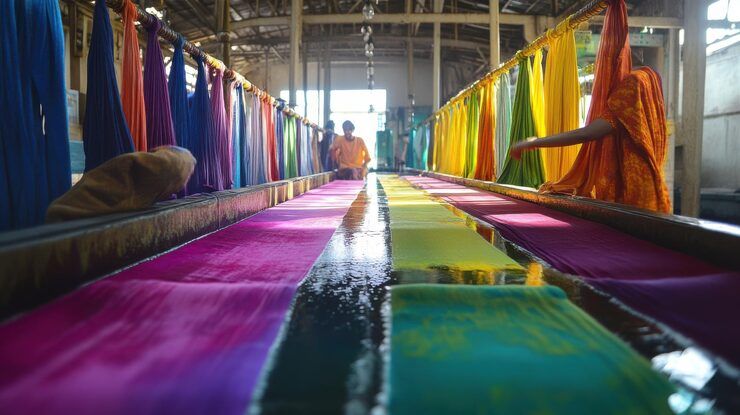
Fabric dyeing jiggers are specialized textile processing machines used to dye fabric in an open-width form. They are commonly used in textile mills where woven fabrics need consistent coloration, controlled processing, and careful handling throughout the dyeing cycle.
ent washing or finishing.
Fabric preparation: The material may undergo desizing, scouring, bleaching, or other pretreatments to remove impurities and improve dye absorption.
Dye-bath preparation: Dyes, water, and compatible chemicals are prepared according to the selected recipe and the fabric's requirements.
Fabric loading: The fabric is positioned correctly on the rollers, with attention to alignment and tension.
Repeated dyeing passes: The fabric moves through the dye bath in alternating directions. Temperature, liquor composition, speed, and tension are monitored throughout the cycle.
Washing and finishing: Depending on the dye chemistry, the fabric may require rinsing, soaping, neutralization, drying, or other finishing operations.
The objective is to achieve the required shade and color uniformity while minimizing fabric damage and unnecessary resource consumption.
Unlike rope dyeing systems, which process fabric in a gathered or twisted form, a jigger moves fabric between two rollers through a dye bath. The fabric passes repeatedly through the liquid while the machine controls movement, tension, and other operating conditions.
This method is used for different woven materials, including cotton, polyester, viscose, and certain blended fabrics, depending on the machine configuration and dyeing chemistry. Fabric construction, dye type, temperature requirements, and finishing objectives determine whether jigger dyeing is suitable for a particular textile.
Understanding the Jigger Dyeing Machine
A conventional jigger dyeing machine consists of two main fabric rollers, a dye bath, a drive mechanism, and controls for fabric movement. Additional components may include temperature regulation, tension monitoring, automatic reversing, and process data recording.
The fabric is wound onto one roller and drawn through the dye bath toward the other roller. Once the fabric reaches the end of the required length, the direction is reversed. This repeated movement allows the dye liquor to contact the fabric during successive passes.
Modern industrial textile machinery may incorporate programmable controls and sensors to help maintain consistent operating conditions.
Main Components and Their Functions
Fabric rollers: Hold and move the fabric through the machine.
Dye bath: Contains the prepared dye liquor and processing chemicals.
Drive system: Controls roller rotation and fabric movement.
Tension control: Helps limit stretching, distortion, and creasing.
Temperature control: Maintains the required dyeing temperature.
Reversing mechanism: Changes the direction of fabric movement.
Control panel: Allows operators to set and monitor process parameters.
Safety systems: Help protect operators around moving machinery and hot liquids.
The exact configuration varies according to machine capacity, automation level, fabric type, and intended production process.
How the Jigger Dyeing Process Works
Jigger dyeing generally follows a sequence of preparation, dye-bath setup, repeated fabric passage, process monitoring, and subsequent washing or finishing.
Fabric preparation: The material may undergo desizing, scouring, bleaching, or other pretreatments to remove impurities and improve dye absorption.
Dye-bath preparation: Dyes, water, and compatible chemicals are prepared according to the selected recipe and the fabric's requirements.
Fabric loading: The fabric is positioned correctly on the rollers, with attention to alignment and tension.
Repeated dyeing passes: The fabric moves through the dye bath in alternating directions. Temperature, liquor composition, speed, and tension are monitored throughout the cycle.
Washing and finishing: Depending on the dye chemistry, the fabric may require rinsing, soaping, neutralization, drying, or other finishing operations.
The objective is to achieve the required shade and color uniformity while minimizing fabric damage and unnecessary resource consumption.
Importance of Fabric Dyeing Jiggers in Textile Manufacturing
Fabric dyeing jiggers remain relevant because they provide open-width processing for woven fabrics that require controlled handling and consistent coloration.
Fabric Quality and Color Consistency
Uneven dyeing can create visible shade differences across the fabric width or length. Such defects may result from uneven preparation, poor dye-bath control, excessive tension, unsuitable processing conditions, or inconsistent chemical dosing.
A properly controlled jigger process can help reduce these problems through repeatable operating conditions and careful monitoring.
Important quality factors include:
Shade uniformity across the fabric width
Consistency between production batches
Colorfastness during washing and rubbing
Fabric strength and dimensional stability
Crease formation and surface appearance
Accurate reproduction of approved color standards
Production Flexibility
Jigger machines can process different fabric lengths and dye recipes, depending on their design and operating limits. This flexibility can be useful for textile mills processing multiple fabric types or changing color requirements.
However, the process requires suitable operator knowledge because fabric tension, dye chemistry, and repeated movement can influence the final result.
Water and Energy Management
Textile dyeing requires water, heating, chemicals, and wastewater treatment. Improving process control can reduce unnecessary heating, repeated rinsing, shade corrections, and rejected fabric.
The actual environmental performance depends on machine design, fabric type, dye chemistry, production conditions, and wastewater management.
Recent Developments and Industry Trends
Developments in textile dyeing machinery during 2025 and 2026 have increasingly focused on automation, process monitoring, resource efficiency, and environmental performance.
Automation and Digital Process Control
Modern jigger systems may use programmable logic controllers, digital temperature controls, automated reversing, and recipe storage.
These features can help operators repeat established dyeing procedures and identify changes in operating conditions. More advanced systems may integrate production records with factory monitoring software.
Automation does not remove the need for correct dye selection, fabric preparation, laboratory testing, and skilled process supervision.
Research on Water and Energy Efficiency
Research published on November 5, 2025, examined approaches for reducing electricity and water consumption in industrial textile dyeing. The research explored process optimization as a way to balance production requirements with resource use and environmental impact.
For jigger operations, relevant areas for improvement include heating control, batch planning, liquor management, rinsing procedures, and minimizing unnecessary repeat processing.
Developments in Jigger Technology
Industry coverage published in December 2025 highlighted continuing development of high-temperature, high-pressure jigger technology, particularly for selected technical and performance fabrics.
Such equipment is not interchangeable with every conventional jigger. Suitability depends on the required temperature and pressure, fabric construction, dye system, and machine specifications.
Lower-Impact Dyeing Methods
Research published in 2025 also examined alternatives to conventional aqueous dyeing, including supercritical carbon dioxide and other approaches intended to reduce water use or chemical impacts. The research emphasizes that no single alternative is suitable for every fiber type or production requirement.
These developments provide context for the wider industry, although they should not be interpreted as evidence that all alternatives can directly replace conventional jigger dyeing.
Laws, Regulations, and Environmental Policies
Fabric dyeing operations are affected by industrial safety rules, chemical-management requirements, wastewater discharge standards, and environmental permits. The applicable requirements depend on the country and location of the textile facility.
Environmental Regulations
Textile dyeing wastewater may contain residual dyes, salts, processing chemicals, suspended solids, and other substances. Facilities must follow the relevant rules for wastewater treatment and discharge.
In the European Union, the Industrial Emissions framework and textile-industry Best Available Techniques reference documents provide guidance for managing industrial pollution. The textile reference document covers pretreatment, dyeing, printing, and finishing activities at relevant industrial installations.
Chemical Management
Textile mills must select and handle dyes and auxiliaries in accordance with applicable chemical regulations and workplace safety procedures.
For textiles entering the European market, REACH restrictions apply to certain hazardous substances in textile and leather articles. The exact restrictions depend on the substance, product category, and intended use.
Indian Environmental Requirements
In India, textile dyeing facilities may be subject to requirements under environmental legislation, water-pollution controls, state pollution control board consent conditions, and applicable industrial safety rules.
Facilities should consult the relevant State Pollution Control Board and the Central Pollution Control Board for requirements covering wastewater treatment, effluent discharge, chemical handling, and environmental monitoring.
Worker Safety
Jigger machines contain moving rollers and may operate with hot dye liquor or heated equipment. Appropriate safeguards include:
Guards around moving components
Emergency-stop mechanisms
Safe loading and unloading procedures
Appropriate personal protective equipment
Chemical handling instructions
Training for maintenance and operation
Lockout procedures during servicing
The applicable workplace safety requirements should be assessed for the specific installation and jurisdiction.
Tools and Resources for Textile Dyeing Operations
Several technical resources can help textile manufacturers monitor jigger performance and improve dyeing consistency.
Laboratory Color Measurement
A spectrophotometer measures color characteristics and helps compare a dyed sample with an approved reference. Color-difference calculations, such as Delta E, can support objective shade assessment.
Results should be interpreted using an appropriate measurement method and agreed acceptance criteria.
Process Monitoring Tools
Useful instruments and systems include:
Temperature sensors
pH meters
Fabric tension measurement systems
Water flow meters
Energy meters
Chemical dosing controls
Production monitoring software
These tools can help identify process variation and support consistent operating procedures.
Dyeing Recipe and Production Records
A structured recipe record should capture the information needed to reproduce a successful dyeing batch.
| Record | Information to Track |
|---|---|
| Fabric details | Fiber composition, construction, and weight |
| Dye recipe | Dye types, quantities, and auxiliaries |
| Process settings | Temperature, speed, and tension |
| Bath conditions | Liquor composition and pH, where relevant |
| Quality results | Shade measurements and colorfastness |
| Resource data | Water, energy, and processing time |
| Final inspection | Defects, corrective action, and batch approval |
Useful Technical References
Manufacturers and process engineers can consult:
Textile machinery operating manuals
Dye and chemical technical data sheets
ISO textile testing standards
Environmental authority guidance
Laboratory color-measurement documentation
Textile engineering research publications
The machine manual and chemical supplier's technical documentation should take priority when establishing equipment-specific operating parameters.
Frequently Asked Questions
What is a fabric dyeing jigger?
A fabric dyeing jigger is a textile machine that moves open-width fabric between rollers through a dye bath. The fabric passes through the bath repeatedly to achieve the intended coloration.
Which fabrics can be dyed using a jigger machine?
Jiggers are commonly used for woven fabrics made from cotton, viscose, polyester, and selected blends. Suitability depends on the machine design, fabric construction, dye chemistry, and required processing conditions.
What factors affect dyeing quality?
Important factors include fabric preparation, dye selection, bath composition, temperature, processing time, fabric tension, and the consistency of machine operation.
How can jigger dyeing reduce environmental impact?
Careful recipe management, efficient heating, controlled rinsing, reduced reprocessing, and effective wastewater treatment can help reduce resource consumption and pollution. The results depend on the process and equipment used.
What is the difference between a conventional jigger and a high-temperature jigger?
A conventional jigger operates within its specified temperature and pressure range for suitable dyeing processes. A high-temperature, high-pressure jigger is designed for processing conditions that require elevated temperature and pressure. The correct equipment depends on the fabric and dye system.
Conclusion
Fabric dyeing jiggers remain an important category of textile processing machinery because they allow woven fabrics to be dyed in open-width form with controlled movement through a dye bath. Their performance depends on machine design, fabric preparation, dye chemistry, temperature management, and tension control.
Recent developments in automation, process monitoring, and resource-efficient dyeing demonstrate how established machinery continues to evolve alongside environmental and quality requirements.
For textile manufacturers, effective jigger operation involves more than selecting appropriate equipment. Reliable results also require trained operators, accurate laboratory testing, documented dyeing recipes, safe working practices, and compliance with relevant environmental regulations. These measures support consistent fabric quality and more responsible textile production.