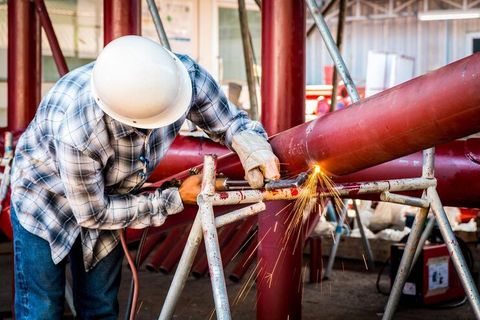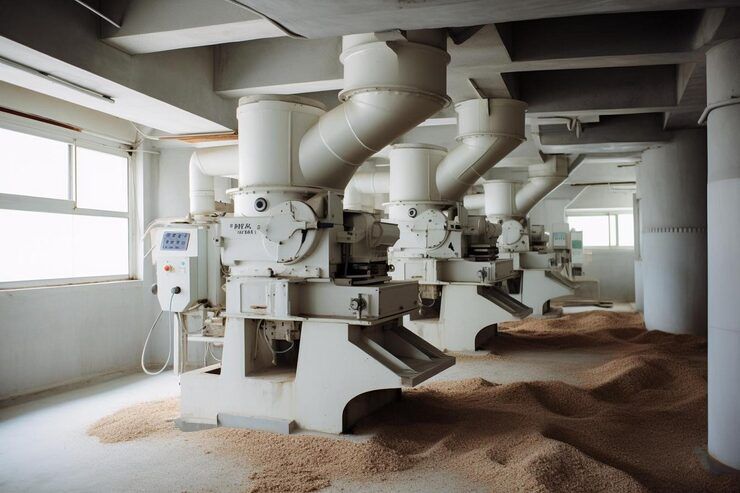
Dust extraction systems are engineered arrangements that capture airborne particles and remove them from the air generated during industrial, commercial, and manufacturing activities. They help control dust produced by cutting, grinding, sanding, drilling, mixing, packaging, and handling materials such as wood, metal, cement, grain, and minerals.
These systems generally use hoods, ductwork, fans, filtration equipment, and dust collection containers. Depending on the application, they may capture particles close to the point where they are created or collect dust from several production areas through a central network.
Dust extraction is closely related to industrial ventilation, particulate filtration, and occupational hygiene. Its main purpose is to reduce airborne contamination, support cleaner working environments, protect equipment, and help organizations meet applicable environmental and workplace safety requirements.
How a Dust Extraction System Works
A typical system follows a straightforward process:
Capture: A hood or extraction arm collects dust near its source.
Transport: Ductwork carries contaminated air toward the collection equipment.
Separation: Filters or mechanical separators remove particles from the airflow.
Discharge: Treated air is returned indoors or released outdoors, depending on the system design and applicable requirements.
Collection: Separated dust accumulates in a hopper, drum, bin, or another suitable container for controlled handling.
Common technologies include cartridge collectors, baghouse dust collectors, cyclone separators, wet scrubbers, and portable extraction units. The appropriate arrangement depends on particle size, dust concentration, material characteristics, airflow requirements, and the hazards associated with the process.
Why Dust Extraction Matters in Modern Industry
Dust control is an important consideration in manufacturing, construction, food processing, woodworking, pharmaceuticals, mining, and agricultural operations. Different industries produce different particles, but uncontrolled airborne dust can create similar challenges involving worker exposure, housekeeping, equipment performance, and production reliability.
Workplace Health and Occupational Hygiene
Some airborne particles can irritate the eyes, skin, and respiratory system. Depending on the material, particle size, concentration, and duration of exposure, dust may also contribute to serious occupational illnesses.
For example, respirable crystalline silica can be generated when workers cut or grind concrete, stone, and similar materials. Certain wood dusts and metal-containing particles also present specific health hazards. Effective extraction helps reduce exposure, although its performance depends on proper design, installation, maintenance, and use.
Dust extraction should form part of a broader occupational hygiene program that includes exposure assessment, appropriate work practices, housekeeping, and respiratory protection when necessary.
Fire, Explosion, and Equipment Protection
Combustible dust can create a fire or explosion hazard when suitable fuel, oxygen, ignition sources, and dispersion conditions occur together. Materials such as fine wood dust, flour, grain, and certain metal powders require particular attention.
Dust collectors, ductwork, and storage containers must be evaluated for the hazards associated with the collected material. Depending on the risk assessment, controls may include suitable electrical equipment, grounding and bonding, explosion venting or suppression, isolation devices, and ignition-source prevention.
Dust accumulation can also interfere with motors, sensors, electrical components, bearings, and moving machinery. Effective collection and routine housekeeping help reduce these operational problems.
Industries That Use Dust Extraction
| Industry | Typical dust source | Common control approach |
|---|---|---|
| Woodworking | Sawing, sanding, routing | Local extraction and cartridge or bag filters |
| Metalworking | Grinding, polishing, machining | Source capture with suitable particulate filtration |
| Construction | Concrete cutting and drilling | On-tool extraction and high-efficiency filtration |
| Food processing | Flour, grain, sugar handling | Enclosed collection and combustible-dust controls |
| Cement production | Conveying and material transfer | Baghouse collectors and transfer-point hoods |
| Pharmaceuticals | Powder blending and handling | Enclosed processes and application-specific filtration |
| Agriculture | Grain movement and cleaning | Local collection and ventilation controls |
The table illustrates typical arrangements rather than universal specifications. Actual equipment selection requires an assessment of the material, process, and workplace conditions.
Recent Developments and Emerging Trends
Dust extraction technology continues to develop through improvements in filtration, monitoring, energy management, and automated equipment maintenance. Developments during 2025 and 2026 are best understood as broader industry trends rather than a single universal change affecting every system.
Smarter Monitoring and Connected Equipment
Industrial facilities increasingly use pressure sensors, airflow monitors, differential-pressure gauges, and connected control systems to evaluate extraction performance. These instruments can help operators identify restricted filters, reduced airflow, abnormal pressure conditions, and maintenance requirements.
Predictive maintenance systems can also analyze operating information to identify developing problems before they cause significant interruptions. However, monitoring equipment must be configured correctly, and sensor readings do not automatically establish that worker exposure is adequately controlled.
Improvements in Filter Technology
Cartridge filters and advanced filter media are widely used where compact equipment and effective particulate capture are required. Filter selection increasingly considers particle characteristics, moisture, temperature, chemical compatibility, and cleaning requirements.
High-efficiency particulate air filtration, commonly known as HEPA filtration, can capture very small airborne particles when used in appropriately designed equipment. However, not every industrial dust collector requires HEPA filters. The necessary filtration level depends on the application, exposure assessment, discharge arrangements, and relevant regulations.
Energy Efficiency and Automated Cleaning
Variable-frequency drives can adjust fan speed to changing airflow demands. Automated pulse-jet cleaning can help remove accumulated dust from compatible filter systems, maintaining performance when correctly designed and operated.
Energy efficiency should not come at the expense of effective capture. Airflow requirements, duct design, filter pressure drop, and operating schedules need to be considered together when evaluating system performance.
Important Developments to Track in 2025–2026
| Area | Development to monitor | Practical significance |
|---|---|---|
| Monitoring | Connected sensors and digital dashboards | Earlier identification of performance changes |
| Filtration | Improved filter media and collector designs | Better suitability for specific particles |
| Maintenance | Condition-based inspection planning | More targeted maintenance activities |
| Energy use | Fan controls and airflow optimization | Potential reduction in electricity demand |
| Safety | Greater attention to combustible-dust risk assessment | Improved identification of ignition and explosion hazards |
Organizations should confirm current technical specifications and regulatory updates with relevant authorities before changing equipment or operating procedures.
Laws, Regulations, and Workplace Policies
Dust extraction requirements vary by country, industry, material, and the type of workplace activity. Regulations may address airborne contaminant exposure, ventilation, hazardous substances, fire prevention, environmental emissions, and the safe handling of collected dust.
United States: OSHA Workplace Standards
The Occupational Safety and Health Administration (OSHA) establishes workplace safety requirements in the United States. Its respirable crystalline silica standards address exposure assessment, engineering controls, housekeeping, employee training, and other protective measures.
For general industry, OSHA's silica standard specifies a permissible exposure limit of 50 micrograms per cubic meter of air, calculated as an eight-hour time-weighted average. Construction activities are covered by a separate silica standard with its own compliance provisions. These requirements apply to relevant exposures and activities, not automatically to every dust extraction installation.
Combustible Dust and Fire Prevention
The 2025 edition of NFPA 660, Standard for Combustible Dusts and Particulate Solids, consolidates requirements addressing combustible-dust hazards across different materials and industries. It covers areas such as hazard identification, dust handling, and fire and explosion prevention.
Its relevance depends on the applicable jurisdiction, adopted codes, and the facility's circumstances. Organizations should determine which standards and local fire codes apply before designing or modifying a dust collection system.
India and Other International Markets
In India, industrial dust management may be affected by occupational safety legislation, applicable state rules, environmental requirements, and conditions established by the relevant pollution control authorities. Depending on the activity, facilities may need to consider air pollution controls, industrial ventilation, hazardous material handling, and fire safety.
Other countries may apply their own workplace exposure limits and industrial ventilation standards. Businesses operating internationally should verify the requirements for each location rather than assuming that compliance in one country guarantees compliance elsewhere.
Tools and Resources for Dust Extraction Planning
Several technical resources help engineers, safety professionals, maintenance teams, and facility managers evaluate industrial dust collection systems.
Airflow and Duct Sizing Calculations
Airflow calculations help estimate the volume of air that must be moved through an extraction hood and duct network. The required airflow depends on the source of dust, hood design, capture distance, duct configuration, and material characteristics.
Useful planning calculations include:
Airflow volume, commonly expressed in cubic feet per minute (CFM) or cubic meters per hour (m³/h).
Duct velocity, which helps evaluate whether particles can remain suspended during transport.
Filter air-to-cloth ratio, used to assess filtration loading in applicable collector designs.
Pressure drop, which indicates resistance through filters, ducts, and other components.
Fan performance, which helps determine whether the equipment can maintain the required airflow under operating conditions.
These calculations support preliminary planning but do not replace professional system design or workplace exposure testing.
Industrial Hygiene and Equipment Assessment
Air sampling instruments can measure airborne particulate concentrations, while differential-pressure gauges help monitor filter loading. Airflow measurement instruments can also be used to assess whether extraction points are operating as intended.
Organizations may use structured inspection records to document:
Hood condition and positioning.
Duct leaks, blockages, and visible dust deposits.
Filter condition and pressure readings.
Fan operation and unusual vibration.
Dust container condition and safe emptying procedures.
Changes in production processes that affect dust generation.
Technical Standards and Reference Materials
Helpful resources include OSHA guidance on occupational exposure, NIOSH publications on workplace health hazards, NFPA standards for combustible dust, and applicable ISO or national standards for air quality and filtration.
Equipment documentation is also important. Technical specifications, filter compatibility information, fan curves, and maintenance instructions help users understand system limitations and operating requirements.
Frequently Asked Questions
What is the main purpose of a dust extraction system?
Its primary purpose is to capture airborne dust near its source and remove particles from the airflow. Properly designed systems can reduce worker exposure, limit dust accumulation, protect equipment, and support compliance with applicable workplace requirements.
What is the difference between dust extraction and air filtration?
Dust extraction collects contaminated air from a particular location or process and transports it to a collection unit. Air filtration refers to the process of removing particles from air. Many industrial extraction systems combine both functions, while general room air filtration may treat air without capturing dust directly at its source.
Which filter is suitable for industrial dust collection?
The appropriate filter depends on particle size, dust concentration, temperature, moisture, chemical properties, and the required collection efficiency. Cartridge filters and baghouse filters are common in industrial applications, while HEPA filtration may be necessary for certain high-efficiency applications. Combustible or reactive dust requires additional consideration beyond filtration efficiency.
How often should a dust extraction system be maintained?
Maintenance frequency depends on operating hours, dust characteristics, equipment design, and manufacturer recommendations. Routine inspections should check airflow, pressure readings, filters, ductwork, fans, and dust containers. Abnormal readings, visible emissions, or reduced capture performance may indicate a need for investigation before the next scheduled maintenance interval.
Can dust extraction eliminate every workplace dust hazard?
No. Performance depends on the system's design, operating condition, and suitability for the material being handled. Poorly positioned hoods, leaking ducts, overloaded filters, and inadequate airflow can reduce effectiveness. Dust extraction should be combined with appropriate work practices, exposure assessment, housekeeping, and other controls where required.
Conclusion
Dust extraction systems play an important role in industrial air quality management, occupational health, equipment protection, and combustible-dust risk reduction. Their effectiveness depends on selecting suitable collection technology, designing adequate airflow, maintaining filtration equipment, and monitoring performance throughout the system's operating life.
Emerging developments in connected monitoring, filter technology, and energy management provide additional ways to evaluate system performance. However, technology alone cannot guarantee safe conditions. Facilities should base decisions on the properties of the dust, the processes involved, relevant exposure assessments, and applicable regulations.
A systematic approach to industrial dust collection helps organizations understand airborne hazards, improve operational reliability, and maintain cleaner working environments while meeting the requirements relevant to their activities.