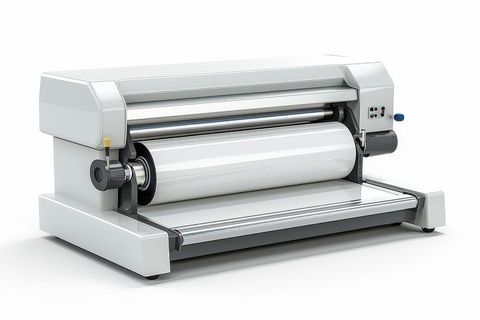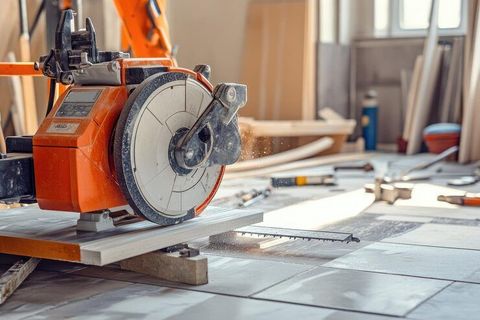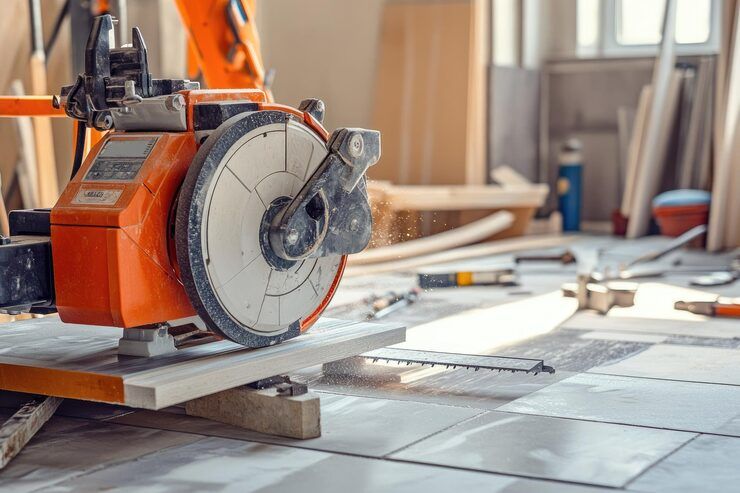
Cutting machines are mechanical, electrical, or computer-controlled systems designed to separate, trim, shape, or profile materials. They are used across manufacturing, construction, textiles, packaging, woodworking, metal fabrication, printing, and many other industries.
The term covers a broad range of technologies. A textile cutting machine can use a blade, while an industrial metal cutting system may use a laser, plasma arc, abrasive wheel, water jet, or other cutting method.
Modern systems increasingly combine precision motion, digital controls, sensors, computer-aided design, and automated material handling. These developments allow cutting processes to be integrated into larger manufacturing workflows.
Main Types of Cutting Machines
Common industrial categories include:
CNC laser cutting machines
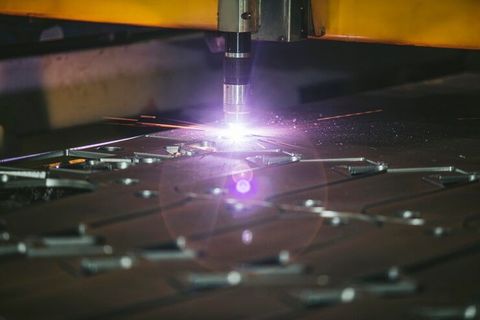
Plasma cutting machines
Water jet cutting machines
CNC plasma tables
Abrasive cutting machines
Band saws
Circular saws
Guillotine and shearing machines
Die-cutting machines
Knife cutting machines
Textile cutting machines
Ultrasonic cutting systems
Each technology has a different operating principle and is suited to particular materials and thickness ranges.
How Cutting Technologies Differ
Laser cutting uses a concentrated beam to heat and separate material. Plasma cutting uses an electrically conductive gas plasma to cut metals.
Water jet systems use a high-pressure stream of water, sometimes combined with abrasive particles. Mechanical systems such as saws and blades physically remove or separate material.
| Technology | Typical Materials | Major Characteristic |
|---|---|---|
| Laser | Steel, aluminum, plastics, wood | High precision and narrow cut |
| Plasma | Conductive metals | Suitable for thicker metal |
| Water jet | Metal, stone, glass, composites | Minimal thermal influence |
| Band saw | Metal, wood, plastics | Continuous mechanical cutting |
| Die cutting | Paper, packaging, textiles | Repeated shapes |
| Knife cutting | Textiles, foam, leather | Mechanical blade cutting |
| Ultrasonic | Textiles, plastics, composites | High-frequency cutting |
Why Cutting Machines Matter Today
Cutting is often one of the first major transformation stages in manufacturing. The accuracy of a cut can influence assembly, material utilization, dimensional consistency, and subsequent production processes.
Modern cutting equipment can help manufacturers handle increasingly complex designs while maintaining repeatable cutting paths.
Applications Across Industries
Cutting machines are used in:
Automotive manufacturing
Aerospace production
Metal fabrication
Construction
Furniture manufacturing
Textile production
Packaging
Electronics
Shipbuilding
Renewable-energy equipment
Machinery manufacturing
Stone and ceramic processing
High-value industrial search categories include CNC cutting machines, industrial laser cutting machines, metal cutting machines, plasma cutting equipment, and automated cutting systems.
CNC and Digital Manufacturing
Computer numerical control, commonly known as CNC, allows cutting equipment to follow programmed coordinates.
A typical digital workflow involves:
Creating a component in CAD software.
Preparing the geometry for cutting.
Generating machine instructions.
Loading the program into the controller.
Positioning and securing the material.
Performing the cutting operation.
Inspecting the finished component.
This digital workflow makes it easier to reproduce complex shapes and modify designs without manually recreating every cutting path.
Material Utilization
Modern cutting software can arrange multiple component shapes on a sheet or roll to reduce unused areas. This process is commonly known as nesting.
Nesting is particularly relevant to sheet metal, textiles, leather, plywood, composites, and other sheet-based materials.
Recent Cutting Machine Developments
Cutting technology continued moving toward automation, digital integration, energy efficiency, and advanced manufacturing during 2025 and 2026.
Advanced Manufacturing in India
On February 23, 2026, India's Office of the Principal Scientific Adviser and Ministry of Heavy Industries held a stakeholder consultation at CMTI, Bengaluru, focused on developing a cohesive strategy for advanced manufacturing systems. The discussion included manufacturing enterprises, MSMEs, startups, academia, research organizations, and technology developers.
The development is relevant to cutting technology because advanced manufacturing increasingly combines CNC equipment, robotics, digital design, machine monitoring, and automated material handling.
AI and Manufacturing Engineering
On February 18, 2026, India's Ministry of Electronics and Information Technology convened industry and academic participants to discuss AI priorities for Manufacturing Engineering Technology. The initiative included discussion of responsible and scalable AI adoption within manufacturing.
For cutting machines, AI-related technologies can potentially support areas such as predictive maintenance, process monitoring, path optimization, quality inspection, and production scheduling.
These applications remain dependent on machine architecture, data availability, software integration, and the specific production environment.
Greater Automation
Modern industrial cutting systems increasingly incorporate:
Servo-controlled axes
Automatic tool changes
Machine vision
Material sensors
Automated loading and unloading
Real-time process monitoring
Production data collection
CAD/CAM integration
Automated inspection
Automation can reduce repetitive operator intervention and help maintain consistent machine movements.
Safety Technology
Safety systems are also developing alongside machine automation. Modern equipment can incorporate guarded working areas, interlocks, emergency stopping functions, light curtains, sensors, and safety-related control systems.
BIS maintains Indian Standards covering several of these machine-safety principles, including risk assessment, emergency-stop functions, interlocking devices, and electrical equipment for machines.
Laws, Standards and Policies in India
India provides an important regulatory example because industrial cutting equipment can fall under machinery-safety, electrical, environmental, workplace, and product-specific requirements.
The exact requirements depend on the cutting technology, machine category, material, application, and applicable notification.
Machinery Safety Framework
BIS maintains machine-category-specific guidelines under Scheme-X. Its current product-specific information includes dedicated guidelines for metal cutting machines and machinery for working materials such as rubber and plastics. The page was updated April 1, 2026.
BIS's metal-cutting-machine guidelines address areas including technical documentation, machine-specific requirements, grouping, labeling, marking, and certification scope.
BIS also lists metal-cutting machine tools under the machinery categories covered by its Scheme-X framework.
Safety Standards
IS 16819:2018, corresponding to ISO 12100:2010, covers general principles for machinery safety, including risk assessment and risk reduction. BIS also lists standards addressing electrical equipment of machines and machine-specific safety requirements.
For thermal cutting equipment, BIS's machine-safety material identifies IS 18165:2023/ISO 17916:2016 as a safety standard covering thermal cutting machines such as oxy-fuel and plasma systems.
Certification Considerations
BIS explains that certification is generally voluntary unless the Central Government makes compliance compulsory for a particular product through an applicable regulatory order.
Therefore, manufacturers and importers should identify the precise machine category and current notification rather than assuming that every type of cutting machine has identical certification requirements.
Environmental and Workplace Factors
Certain cutting processes can generate dust, fumes, noise, sparks, wastewater, or other by-products. Facilities should evaluate the environmental and occupational requirements applicable to their particular process.
Laser, plasma, thermal, abrasive, and mechanical cutting systems can have very different workplace hazards, so appropriate ventilation, guarding, personal protective equipment, electrical controls, and emergency procedures should be determined through a suitable risk assessment.
Tools and Resources for Cutting Machines
Modern cutting operations combine machine hardware with digital design, production planning, material databases, inspection equipment, and maintenance tools.
Useful Tools
CAD software: Creates accurate two-dimensional and three-dimensional component geometry.
CAM software: Converts designs into machine instructions.
Nesting software: Arranges multiple shapes efficiently on sheets or rolls.
Cutting-speed calculators: Help estimate appropriate process parameters.
Material-thickness charts: Assist with selecting appropriate cutting technologies.
Kerf calculators: Account for the material removed by the cutting process.
CNC simulation software: Helps identify tool-path problems before machining.
Digital calipers: Verify dimensions after cutting.
Coordinate measuring equipment: Supports detailed dimensional inspection.
Machine-monitoring software: Records production and machine-condition information.
BIS standards database: Helps identify relevant Indian Standards and current technical requirements.
BIS provides a certification process that begins with identifying the applicable Indian Standard and documenting relevant manufacturing, process-control, quality-control, and testing capabilities.
Important Machine Specifications
When evaluating industrial cutting machines, useful specifications include:
Maximum cutting area
Material compatibility
Maximum material thickness
Cutting speed
Positioning accuracy
Repeatability
Power requirements
Number of controlled axes
Cutting-head configuration
Automatic material handling
Software compatibility
Safety systems
Dust or fume extraction
Maintenance requirements
A higher cutting speed does not necessarily mean better overall production performance. Accuracy, material compatibility, machine uptime, changeover requirements, and finished-part quality also influence the practical outcome.
Frequently Asked Questions
What is a cutting machine?
A cutting machine is equipment designed to separate, trim, or shape a material using mechanical, thermal, fluid, abrasive, or other cutting methods. Industrial examples include laser, plasma, water jet, saw, blade, and die-cutting systems.
Which cutting machine is suitable for metal?
The appropriate technology depends on metal type, thickness, geometry, accuracy requirements, and production conditions. Laser, plasma, water jet, band saw, and other systems can all be appropriate for different metal-cutting applications.
What is CNC cutting?
CNC cutting uses computer-controlled machine movements to follow programmed coordinates and produce a specified shape. CNC technology can improve repeatability and support complex cutting geometries.
What is nesting in cutting operations?
Nesting is the process of arranging multiple component shapes within a sheet, plate, or roll to use the available material efficiently. Specialized software can automatically calculate layouts based on the geometry and material dimensions.
Are cutting machines regulated in India?
Some categories of machinery are covered by Indian Standards and specific conformity or certification frameworks. BIS currently provides machine-category-specific guidance for areas including metal cutting machines, while the exact requirements depend on the machine category and applicable government notification.
Conclusion
Cutting machines are fundamental components of modern manufacturing, converting raw sheets, plates, rolls, blocks, and other materials into accurately shaped components.
The category encompasses many technologies, including laser, plasma, water jet, mechanical, knife, abrasive, and die-cutting systems. Each technology has different strengths depending on material type, thickness, geometry, production requirements, and dimensional targets.
During 2025 and 2026, the wider manufacturing sector continued moving toward automation, digital integration, advanced process monitoring, and AI-supported manufacturing engineering. India's 2026 initiatives around advanced manufacturing systems and AI for Manufacturing Engineering Technology illustrate this broader direction.
Safety and regulatory requirements are equally important. India's BIS framework includes machine-specific guidance for metal cutting equipment and standards covering machinery risk assessment, electrical safety, guarding, emergency stopping, and other safety considerations.
For anyone researching CNC cutting machines, industrial laser cutting machines, metal cutting equipment, or other automated cutting technologies, the most useful approach is to evaluate material compatibility, thickness range, accuracy, cutting method, automation, software integration, safety, maintenance, and applicable standards together.
The continued integration of CNC controls, sensors, CAD/CAM software, automation, and intelligent manufacturing systems is likely to make industrial cutting technology increasingly connected to the broader digital manufacturing environment.