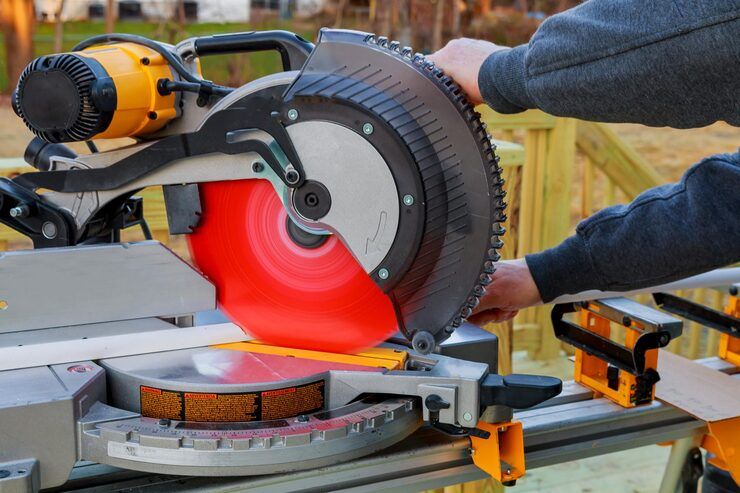
Metal cutting band saws are industrial machines designed to cut metal stock into specific lengths, shapes, and dimensions. They use a continuous toothed metal blade that moves around two or more wheels while the workpiece remains secured on a supporting table or cutting bed.
These machines are widely used in metal fabrication, manufacturing, construction, automotive production, machinery maintenance, and metalworking workshops. Depending on their design, they can cut solid bars, pipes, structural sections, billets, and other metal materials.
The main purpose of a metal cutting band saw is to produce controlled cuts while balancing accuracy, cutting speed, blade life, and material efficiency. Different machine configurations are available because a small workshop cutting steel tubing has different requirements from an industrial facility processing large metal billets.
How Metal Cutting Band Saws Work
A band saw uses a continuous blade with teeth along one edge. An electric motor drives the blade around wheels, creating a steady cutting motion. The operator or automated feed system moves the blade into the workpiece at a controlled rate.
The blade's teeth remove small amounts of material as they pass through the metal. Cutting performance depends on the material's hardness, workpiece dimensions, blade tooth geometry, blade speed, and cutting pressure.
Many metal cutting band saws use cutting fluid or coolant to reduce heat, remove chips, and improve blade performance. Some applications use specialized blades or alternative cutting arrangements depending on the material and operating conditions.
Main Types of Metal Cutting Band Saws
Horizontal band saws are commonly used for cutting bars, tubes, pipes, and structural metal sections to length. The blade typically moves downward through a workpiece secured in a vise.
Vertical band saws position the blade vertically and allow the operator to guide material along a table. They are useful for certain contour cuts, irregular shapes, and fabrication tasks.
Automatic band saws use controlled feeding and cutting cycles to process repeated lengths with less manual intervention. They are often used in production environments requiring consistent output.
CNC band saws incorporate computerized controls for selected cutting and feeding operations. Depending on the model, they can support programmed dimensions, repeatable production sequences, and integration with other manufacturing equipment.
Materials Commonly Processed
Metal cutting band saws can be configured for several material groups, including:
Carbon steel and alloy steel
Stainless steel
Aluminum and other nonferrous metals
Brass and copper
Metal pipes and hollow sections
Structural beams and profiles
Selected industrial alloys
Blade selection must match the material, its dimensions, and the required cut quality. A blade suitable for aluminum may not perform well on hardened steel under the same operating conditions.
Why Metal Cutting Band Saws Matter
Metal cutting band saws help manufacturers prepare raw materials for machining, welding, assembly, and fabrication. Accurate cutting reduces the need for unnecessary material removal in later production stages.
Manufacturing Efficiency
In manufacturing, material preparation often determines how smoothly subsequent operations proceed. A properly configured band saw can produce repeatable workpiece lengths and reduce avoidable handling.
Automatic machines are especially useful when many pieces must be cut to the same dimensions. Their performance still depends on correct setup, blade condition, material positioning, and regular inspection.
Material Utilization
Accurate cutting can help reduce scrap and improve the use of metal stock. The width of material removed by the blade, known as the kerf, affects how many pieces can be obtained from a length of raw material.
Manufacturers can use cutting-layout calculations to determine the required stock length while allowing for blade kerf, end trimming, and dimensional tolerances.
Precision and Repeatability
Band saws are useful for producing straight cuts across a wide range of metal profiles. Consistent blade tension, suitable tooth pitch, correct feed pressure, and stable workpiece clamping all contribute to cutting accuracy.
However, the machine alone does not guarantee a precise result. Blade wear, vibration, material movement, and incorrect operating parameters can affect dimensional consistency.
Industrial Applications
Metal cutting band saws are used in several sectors:
Construction: Preparing steel beams, tubes, and structural components.
Automotive manufacturing: Cutting metal stock for machining and component production.
Aerospace manufacturing: Preparing specified metal materials under controlled production procedures.
Metal fabrication: Processing plates, bars, pipes, and profiles.
Machinery production: Preparing components for machining and assembly.
Maintenance workshops: Cutting replacement parts and metal stock for repairs.
Recent Developments and Industry Trends
Metal cutting technology continues to evolve through automation, digital monitoring, improved blade materials, and more efficient production planning. Developments during 2025 and 2026 reflect broader changes across industrial manufacturing rather than one universal change affecting every band saw model.
Automation and Smart Manufacturing
Manufacturers increasingly integrate cutting equipment with automated material handling, programmable feed systems, and production monitoring tools.
These systems can help reduce repetitive manual work and improve production consistency. More advanced configurations may record cutting cycles, operating status, and maintenance indicators.
The practical benefits depend on production volume, material variety, operator training, and how well the equipment integrates with existing manufacturing systems.
Improved Blade Technology
Blade development continues to focus on tooth geometry, cutting durability, heat resistance, and performance across different materials.
Bi-metal blades combine a flexible backing with harder cutting teeth, making them useful for many general metalworking applications. Carbide-tipped blades can be appropriate for selected demanding applications, depending on the material and machine specifications.
Choosing a blade requires more than comparing tooth material. Tooth pitch, blade width, thickness, speed, and workpiece geometry also affect results.
Digital Production Monitoring
Connected manufacturing equipment can help operators record cycle times, identify production interruptions, and plan maintenance. Some systems also support monitoring of blade usage and machine operating conditions.
During 2025–2026, industrial digitalization continued to emphasize equipment data, predictive maintenance, and manufacturing integration. The availability of these functions varies by manufacturer and machine generation.
Energy and Coolant Management
Industrial facilities are also examining energy consumption, coolant use, chip collection, and material waste.
Appropriate cutting parameters and routine maintenance can help avoid unnecessary machine operation and premature blade replacement. Actual energy and material savings depend on the machine, workload, metal type, and operating practices.
Laws, Regulations, and Industrial Safety
Metal cutting band saws must be operated according to applicable workplace safety regulations, machine instructions, and local environmental requirements. The precise legal obligations depend on the country where the equipment is installed.
United States Workplace Safety
In the United States, the Occupational Safety and Health Administration (OSHA) establishes workplace safety requirements relevant to machinery and metalworking.
OSHA's general machine-guarding standard, 29 CFR 1910.212, addresses guarding against hazards associated with machine operation. Relevant requirements can include protection from moving parts and other dangerous points of operation.
Employers must assess the equipment and workplace conditions to determine the appropriate safeguards. Blade wheels, exposed blade sections, cutting areas, and moving workpieces require particular attention.
European Machinery Requirements
In the European Union, machinery placed on the market must comply with applicable machinery legislation and relevant safety requirements.
Regulation (EU) 2023/1230 on machinery establishes a framework that will generally apply from 20 January 2027, replacing the Machinery Directive 2006/42/EC, subject to the regulation's transitional provisions and specific exceptions.
Manufacturers and operators should verify which requirements apply to the machine, its date of placement on the market, and its intended use.
Essential Operating Precautions
Common safety practices include:
Keep guards in their intended positions.
Secure the workpiece firmly before cutting.
Use eye and hearing protection where the risk assessment requires it.
Keep hands away from the moving blade.
Follow approved procedures for blade changes and adjustments.
Isolate electrical and other hazardous energy before maintenance.
Use suitable tools to remove metal chips.
Follow the manufacturer's coolant and operating instructions.
Operators should receive appropriate training before using industrial cutting equipment.
Tools and Resources for Metal Cutting Band Saws
Technical references and planning tools can help improve machine selection, cutting accuracy, and operating consistency.
Blade Selection Charts
Blade manufacturers commonly publish charts that relate tooth pitch, blade dimensions, cutting speed, and material type. These references can help identify suitable blade configurations for solid bars, pipes, tubes, and structural sections.
The machine manufacturer's specifications should always take precedence where operating limits differ.
Cutting Speed Calculators
Cutting speed is often expressed in metres per minute (m/min) or surface feet per minute (SFPM). Calculators can help convert between these units and compare recommended speeds for different materials.
The appropriate speed depends on the blade, machine, workpiece, and manufacturer's recommendations.
Material Length and Kerf Calculators
A material-cutting calculator can estimate how many pieces can be produced from a stock length.
A practical calculation should account for:
Required finished length
Number of pieces
Blade kerf
End trimming
Cutting allowance
Dimensional tolerances
These calculations help support material planning but should be checked against actual production conditions.
Maintenance Checklists
A routine inspection checklist can record blade condition, tension, coolant condition, vise alignment, wheel condition, guarding, and unusual vibration or noise.
Maintenance procedures must follow the equipment manual and workplace safety requirements.
Manufacturer Documentation
Machine manuals, blade technical sheets, and official safety documentation provide information about permissible speeds, blade dimensions, tension, coolant selection, maintenance intervals, and operating limits.
Reliable technical documentation is particularly important when processing stainless steel, hardened alloys, or large industrial workpieces.
Frequently Asked Questions
What is a metal cutting band saw used for?
It is used to cut metal bars, pipes, tubes, structural profiles, and other stock into specified dimensions for manufacturing, construction, machining, and fabrication.
What is the difference between horizontal and vertical band saws?
Horizontal band saws commonly cut material to length as the blade moves through a clamped workpiece. Vertical band saws use a vertically moving blade and table, allowing operators to guide material for selected contouring and fabrication tasks.
How do operators select the correct blade?
Blade selection depends on the material, workpiece dimensions, tooth pitch, blade construction, cutting speed, and machine specifications. Manufacturer selection charts can help identify an appropriate configuration.
Why is coolant used during metal cutting?
Coolant can help control heat, reduce friction, remove chips, and improve cutting performance. The correct fluid and application method depend on the material and machine instructions.
How often should a metal cutting band saw be maintained?
Inspection frequency depends on operating hours, workload, material type, and manufacturer guidance. Operators should check blade condition and machine safeguards routinely, with more detailed maintenance performed according to the equipment manual.
Conclusion
Metal cutting band saws are important tools in modern metalworking because they combine continuous cutting motion with adaptable blade configurations and a wide range of industrial applications.
Horizontal, vertical, automatic, and CNC models address different production requirements. Their performance depends on suitable blade selection, correct cutting parameters, stable workpiece clamping, regular maintenance, and trained operators.
Automation and digital monitoring continue to influence industrial cutting, while workplace safety and machinery regulations establish essential operating requirements. By consulting technical documentation, using appropriate planning tools, and following applicable safety procedures, manufacturers can better manage cutting accuracy, material use, and production consistency.