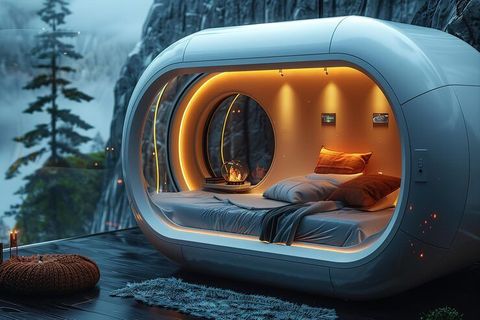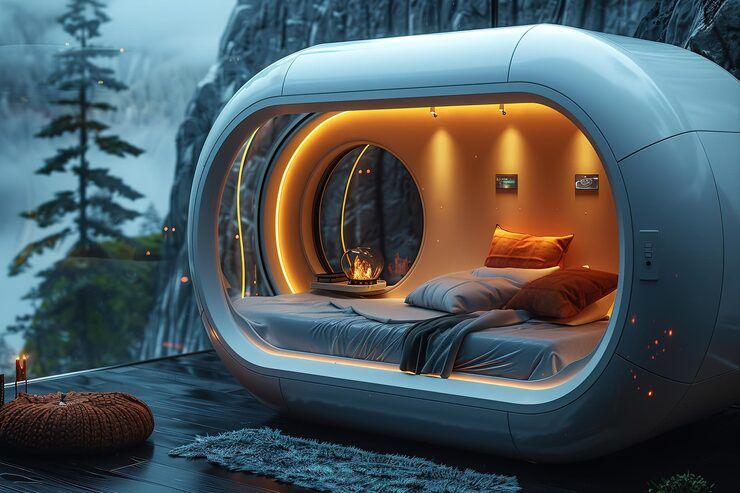
Budget capsule hotels are accommodation facilities designed to provide a compact, private sleeping space within a larger building. Instead of conventional hotel rooms, guests typically use individual sleeping capsules or pods arranged in shared areas. Bathrooms, lounges, lockers, and other facilities may be communal.
The concept originated in Japan during the late 1970s and has since expanded into other markets, including airports, major cities, transport hubs, and destinations popular with solo travelers. Modern capsule accommodation ranges from simple sleeping compartments to more advanced pods with lighting controls, charging outlets, ventilation, privacy screens, and digital access systems.
The main purpose of capsule hotels is to use available building space efficiently while providing travelers with a designated place to rest. Their suitability depends on personal privacy requirements, luggage needs, accessibility, location, and the facilities included in the accommodation.
Understanding Capsule Hotel Design
A typical capsule is a small enclosed sleeping compartment designed for one person. It may contain a mattress, reading light, power outlet, ventilation system, and small storage features.
Capsules are often arranged in rows or stacked vertically. Some facilities separate sleeping areas by floor or provide different sections for different guests. Bathroom facilities and larger luggage storage are commonly located outside the capsule itself.
Modern capsule hotels may include:
Individual sleeping pods
Privacy curtains or sliding screens
Personal lighting controls
Electrical charging outlets
Shared bathrooms and showers
Lockers for personal belongings
Common lounges
Digital check-in systems
Climate control and ventilation
Dedicated quiet areas
The design varies considerably by property. Some capsules provide only basic sleeping space, while others include enhanced sound insulation, larger sleeping compartments, or additional personal storage.
Different Types of Capsule Accommodation
Capsule accommodation is not limited to traditional city-center properties. Several formats have developed around different travel needs.
Traditional capsule hotels: These usually feature stacked sleeping pods, shared facilities, and compact communal areas.
Airport sleeping pods: These are located within or near airport terminals and are intended for travelers with long connections, delayed flights, or early departures.
Premium capsule hotels: These may feature improved bedding, privacy screens, individual climate controls, and more spacious interiors.
Transit-oriented capsule accommodation: These properties are positioned near railway stations, bus terminals, or major transport connections.
Design-focused capsule properties: These combine compact accommodation with contemporary interiors, carefully planned lighting, and organized common areas.
The term “budget” does not necessarily mean that every property is inexpensive. Rates depend on location, season, availability, length of stay, and the facilities provided.
Why Budget Capsule Hotels Matter
Capsule hotels address several challenges associated with urban accommodation, especially where land is limited and conventional hotel rooms require substantial floor space.
Efficient Use of Urban Space
In dense cities, compact accommodation can make use of smaller buildings or floor areas that are difficult to organize around conventional hotel rooms.
By separating sleeping compartments from shared facilities, capsule properties can accommodate multiple guests within a relatively compact layout. However, the design must still meet applicable fire-safety, ventilation, sanitation, and occupancy requirements.
Supporting Different Travel Patterns
Capsule hotels can suit travelers who need a place to rest between transportation connections or who spend much of their time exploring a destination.
Potential users include:
Solo travelers
Backpackers
Business travelers on short visits
Travelers with overnight connections
Visitors attending events
People seeking compact urban accommodation
The format may be less appropriate for families requiring larger rooms, travelers carrying bulky luggage, or people who need extensive private space.
Comparing Capsule Hotels With Other Accommodation
| Feature | Capsule Hotel | Conventional Hotel Room | Hostel Dormitory |
|---|---|---|---|
| Sleeping arrangement | Individual pod | Private room | Shared sleeping room |
| Personal space | Compact | Generally larger | Varies |
| Bathroom | Often shared | Often private | Often shared |
| Luggage storage | Usually separate locker or area | Usually within room | Varies |
| Social environment | Shared common areas | More private | Often communal |
| Accessibility | Property-dependent | Property-dependent | Property-dependent |
This comparison describes common arrangements rather than universal rules. Individual properties can differ substantially.
Recent Developments and Trends
Capsule accommodation continues to evolve as travel patterns, technology, and urban property design change. Recent developments through 2025 and 2026 have emphasized digital access, compact accommodation formats, and the use of sleeping pods in transport environments.
Digital Check-In and Access Control
Many modern accommodation facilities use online reservations, electronic payment systems, digital registration, and automated access controls.
These technologies can reduce the need for traditional reception procedures, although identification requirements and staff availability depend on local regulations and property policies.
Travelers should confirm how room access works before arrival, particularly when arriving late at night.
Airport Sleeping Pods
Airport sleeping facilities remain an important part of the broader capsule accommodation market. Airports face changing passenger flows, overnight connections, and irregular travel schedules, creating demand for compact resting areas.
Some airport facilities provide private sleeping compartments, while others provide reclining seats or enclosed rest areas. These formats are not identical to full capsule hotels, so travelers should check whether a facility includes a secure sleeping space, showers, luggage storage, and overnight access.
Improved Privacy and Comfort
Contemporary capsule designs increasingly focus on practical comfort features, including improved ventilation, personal lighting, charging outlets, acoustic treatments, and better use of internal storage.
However, sound insulation and privacy differ by property. A curtain or sliding screen may limit visibility without providing complete acoustic privacy.
Sustainability and Space Efficiency
Compact accommodation can reduce the floor area allocated to each sleeping space, but this alone does not establish that a property has a lower environmental impact.
Energy consumption, laundry, ventilation, building materials, water use, and occupancy levels all influence environmental performance. Travelers interested in sustainability should examine documented environmental practices rather than relying solely on the capsule format.
Laws and Policies Affecting Capsule Hotels
Capsule hotels are subject to accommodation, building, fire-safety, sanitation, accessibility, and consumer-protection rules. The precise requirements depend on the country and local authority.
Accommodation Regulations in Japan
Japan has a long history of capsule hotels. Accommodation facilities are generally regulated under the country's Hotel Business Act, with relevant licensing and operational requirements administered by local authorities.
Operators must meet applicable requirements for matters such as sanitation, facility management, and guest accommodation. The precise classification and obligations depend on the property and its operating arrangements.
Guests should follow check-in procedures, quiet-hour rules, locker instructions, and any restrictions concerning food, smoking, or shared facilities.
Fire Safety and Building Requirements
Compact sleeping pods create specific design considerations because guests sleep within enclosed or semi-enclosed compartments.
Depending on local requirements, a facility may need appropriate fire detection, alarm systems, emergency lighting, marked evacuation routes, fire-resistant materials, ventilation, and suitable exits.
Travelers should identify emergency exits and understand the property's evacuation procedures when checking in.
Accessibility and Guest Privacy
Accessibility rules vary by jurisdiction. A property may need accessible routes, suitable sanitary facilities, or other accommodations depending on its size, classification, and applicable legislation.
Guest privacy and personal-data protection also matter when facilities use digital registration, identity verification, surveillance in common areas, or electronic access systems. Travelers should review property policies and use designated changing and bathroom areas.
Tools and Resources for Planning a Capsule Hotel Stay
Several digital resources can help travelers compare accommodation options and understand the facilities available.
Accommodation Comparison Platforms
Travel booking platforms can help users compare location, guest reviews, room arrangements, cancellation terms, check-in hours, and available amenities.
When reviewing a capsule property, pay attention to the exact accommodation type. A sleeping pod inside a shared room differs from an enclosed private capsule or a small conventional hotel room.
Maps and Transportation Tools
Digital maps can help determine the distance between accommodation and major transport connections.
Useful details include:
Walking distance to railway stations
Airport terminal access
Late-night public transportation
Nearby restaurants and convenience stores
Entrance locations
Accessibility information
Budget Planning Checklist
A simple spreadsheet can help estimate the overall accommodation budget.
| Expense Category | What to Consider |
|---|---|
| Nightly accommodation | Rate for each night |
| Local taxes | Applicable accommodation taxes |
| Transportation | Airport or station transfers |
| Luggage storage | Whether storage is included |
| Meals | Food during the stay |
| Laundry | Available facilities and charges |
| Cancellation | Conditions and deadlines |
Actual expenses depend on the destination, booking conditions, and personal requirements.
Practical Booking Checklist
Before confirming a stay, check:
Capsule dimensions and sleeping arrangements
Bathroom and shower facilities
Locker size and security
Check-in and check-out times
Reception or late-arrival arrangements
Ventilation and temperature controls
Noise policies
Accessibility
Cancellation conditions
Reviews mentioning cleanliness and comfort
Frequently Asked Questions
What is a budget capsule hotel?
A capsule hotel is an accommodation facility with compact sleeping compartments and commonly shared bathrooms, lounges, or other facilities. The term “budget” generally describes its compact accommodation format, but actual rates vary by destination and travel dates.
Are capsule hotels suitable for solo travelers?
They can be suitable for solo travelers who prioritize a compact sleeping space and convenient location. Suitability depends on privacy preferences, luggage requirements, noise tolerance, and the facilities available.
Do capsule hotels provide private bathrooms?
Many capsule hotels use shared bathrooms and shower facilities. Some premium properties provide more private arrangements, so guests should check the specific room description before confirming a stay.
Are capsule hotels available at airports?
Yes. Some airports and nearby accommodation facilities provide sleeping pods or capsule-style rooms for travelers with overnight connections or unusual flight schedules. Facilities, access conditions, and reservation requirements vary by location.
What should travelers check before choosing a capsule hotel?
Travelers should examine sleeping-space dimensions, cleanliness reviews, ventilation, locker arrangements, bathroom access, accessibility, noise levels, transportation connections, and check-in policies.
Conclusion
Budget capsule hotels represent a compact approach to accommodation that combines individual sleeping compartments with shared facilities. Their development reflects the needs of travelers who prioritize space efficiency, convenient locations, and practical overnight arrangements.
Modern capsule properties vary widely, from basic sleeping pods to more advanced designs with digital access, enhanced privacy features, and organized communal areas. Their suitability depends on the facilities provided, local regulations, and each traveler's comfort requirements.
Before selecting a capsule hotel, it is useful to compare the exact sleeping arrangement, transportation access, safety provisions, accessibility, and overall travel budget. Understanding these details helps travelers evaluate capsule accommodation realistically and choose an arrangement that matches their needs.