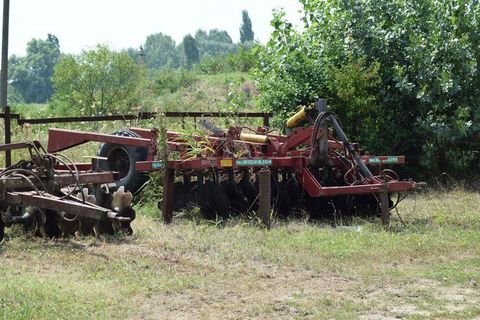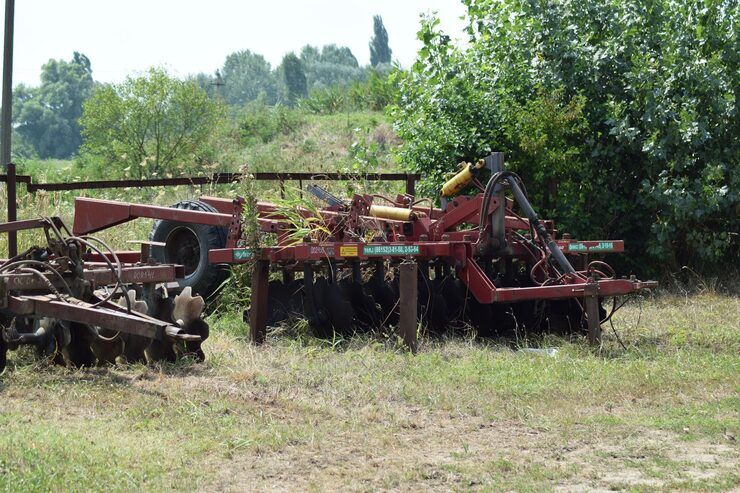
Agricultural shredders are machines designed to cut, chop, or reduce plant material into smaller pieces. They are used in farming, horticulture, landscaping, and biomass preparation to manage crop residues, weeds, branches, stalks, and other plant matter.
After harvesting crops such as maize, wheat, rice, and sugarcane, fields can contain substantial quantities of leftover vegetation. Agricultural shredders help process this material so that it can be managed more efficiently, incorporated into soil where appropriate, or prepared for other agricultural uses.
These machines range from compact equipment for orchards and gardens to heavy-duty tractor-mounted machinery designed for large farms. Their selection depends on crop type, field conditions, required particle size, available power, and the intended use of the shredded material.
How Agricultural Shredders Work
An agricultural shredder uses rotating blades, flails, hammers, or cutting assemblies to reduce plant material into smaller fragments. Depending on the design, the equipment may be mounted behind a tractor, powered by a separate engine, or integrated into a specialized agricultural machine.
Common power arrangements include a tractor's power take-off (PTO), hydraulic systems, and independent engines. PTO-driven machines are widely used in commercial agriculture because they can operate with compatible tractors.
Typical applications include:
Chopping crop residues after harvesting
Managing weeds and unwanted vegetation
Processing stalks and fibrous plant material
Maintaining orchards and vineyards
Clearing vegetation along field boundaries
Preparing plant material for composting
Supporting biomass preparation
Maintaining agricultural land
Shredding does not automatically make every type of residue suitable for soil incorporation. Material size, moisture, crop disease, soil conditions, and nutrient management all influence the appropriate handling method.
Main Types of Agricultural Shredders
Flail Shredders
Flail shredders use multiple hinged cutting elements attached to a rotating drum. They are commonly used for grass, weeds, crop residues, and general vegetation management.
The hinged elements can tolerate some variation in vegetation density, although operating capacity depends on machine design, blade condition, and working speed.
Rotary Shredders
Rotary shredders use rotating blades to cut vegetation. Heavy-duty rotary machines are commonly used for pasture maintenance, field edges, and tougher vegetation.
Hammer-Mill Shredders
Hammer-based systems use repeated impacts to break plant material into smaller particles. They are useful for applications requiring more controlled size reduction, including certain biomass-processing operations.
Orchard and Vineyard Shredders
These machines are designed for use between tree rows or vineyard lines. Their dimensions and operating arrangements help manage pruning residues, grass, and other vegetation in relatively confined spaces.
Industrial Agricultural Shredders
Larger systems can process substantial quantities of crop residues or fibrous biomass. They may form part of a processing line that includes conveyors, screens, collection equipment, or additional size-reduction machinery.
Why Agricultural Shredders Matter
Agricultural shredders help farmers manage plant residues that would otherwise remain in fields or require separate handling.
Crop Residue Management
Harvesting leaves stalks, straw, leaves, and other plant material behind. If the residue is unevenly distributed, it can interfere with subsequent field operations.
Shredding can produce a more uniform layer of material, which may improve the practical management of crop residues and help prepare land for later operations.
Soil Health and Organic Matter
Appropriately managed crop residues can contribute organic matter to agricultural soils. As plant material decomposes, it can release nutrients and support soil biological activity.
However, the results depend on residue composition, soil moisture, temperature, microbial activity, and farming practices. Shredding alone does not guarantee improved soil fertility.
Reducing Residue Disposal Challenges
In some agricultural regions, crop residues are burned because farmers face time constraints or difficulties handling large volumes of plant material. Burning can contribute to air pollution and greenhouse gas emissions.
Shredding provides another residue-management option. Depending on local conditions, the processed material may be retained as mulch, incorporated into soil, composted, or prepared for other uses.
Farm Productivity
Efficient residue management can help coordinate harvesting, field preparation, and planting schedules. Farmers may also reduce the need for separate manual cutting operations when a suitable machine can perform the task.
Typical Applications by Crop
| Crop or Material | Common Shredding Purpose | Important Consideration |
|---|---|---|
| Rice straw | Residue management | Moisture and decomposition |
| Wheat straw | Field preparation | Even distribution |
| Maize stalks | Stalk reduction | Material toughness |
| Sugarcane residues | Vegetation processing | Fibrous material |
| Orchard branches | Pruning residue management | Branch diameter |
| Grass and weeds | Field maintenance | Vegetation density |
| Biomass feedstock | Particle-size reduction | Required output size |
Recent Developments and Technology Trends
Agricultural machinery continues to evolve as farmers seek better residue management, improved energy efficiency, and more precise control of field operations.
Precision Agriculture Integration
During 2025 and 2026, precision agriculture continued to expand through GPS guidance, digital farm records, equipment monitoring, and data-supported field management.
These developments can help coordinate shredding operations with harvesting and planting schedules. However, GPS guidance is generally a separate system rather than an inherent feature of every agricultural shredder.
Improved Residue Management
Agricultural research continues to examine how crop residue retention, reduced tillage, and soil-cover practices affect erosion, moisture retention, nutrient cycling, and soil structure.
The appropriate shredding method depends on the crop and the wider farming system. For example, finely chopped residue may be useful in some planting systems, while other systems require residue to remain on the soil surface.
Biomass Processing
Interest in agricultural biomass has encouraged development of equipment that prepares crop residues for composting, bioenergy applications, and other material-processing pathways.
A shredder may form the first stage of a larger system, but the final application usually requires additional steps such as drying, screening, transport, or processing.
Equipment Efficiency and Monitoring
Manufacturers continue to develop machinery with improved blade designs, wear-resistant components, easier maintenance access, and more efficient power transmission.
Electronic monitoring can also help operators observe operating conditions on supported equipment. Actual fuel consumption and productivity vary according to tractor power, vegetation density, machine width, terrain, and operating speed.
Laws, Policies, and Agricultural Regulations
Agricultural shredder regulations depend on the country where the machine is manufactured and operated. Requirements may cover machinery safety, tractor compatibility, environmental protection, workplace procedures, and agricultural residue management.
Machinery Safety Standards
Agricultural machinery must be designed and operated with appropriate safeguards. Relevant standards may address rotating components, power transmission shafts, protective guards, stability, and operator exposure to moving parts.
The International Organization for Standardization publishes agricultural machinery safety standards, including requirements relevant to tractors and powered equipment.
Operators should ensure that guards are correctly installed and that the machine is compatible with the tractor's power and operating specifications.
Crop Residue and Air Pollution Policies
In India, crop residue management has received significant policy attention, particularly in areas affected by seasonal agricultural burning.
Central and state government programs have supported mechanization and residue-management practices, including the use of agricultural machinery to reduce dependence on open-field burning.
The availability, eligibility requirements, and support arrangements of these programs vary by state, financial year, and applicant category. Farmers should consult current government notifications for applicable details.
Environmental and Soil Management
Local agricultural and environmental policies may influence how crop residues are handled. Some locations have restrictions on open burning or requirements related to environmental protection.
Shredding can support alternative residue-management methods, but it is not a complete solution by itself. Farmers should consider crop disease, nutrient management, soil conditions, and locally applicable requirements before incorporating residues.
Safe Operating Practices
Operators should follow the equipment manufacturer's instructions and applicable workplace safety rules.
Important precautions include:
Inspecting blades and protective guards before operation
Keeping people away from rotating equipment
Disconnecting the power source before maintenance
Avoiding loose clothing near moving components
Using suitable personal protective equipment
Following safe PTO connection and disconnection procedures
Checking the working area for stones and other debris
Tools and Resources for Agricultural Shredder Selection
Selecting appropriate equipment requires an understanding of machine capacity, power requirements, crop conditions, and maintenance needs.
Tractor Compatibility
Before selecting a tractor-mounted shredder, check the tractor's available PTO power, PTO speed, hitch arrangement, hydraulic capacity where relevant, and recommended machine specifications.
A mismatch between the tractor and the implement can lead to poor performance, excessive wear, or unsafe operation.
Field Capacity Calculation
Theoretical field capacity can be estimated using working width and operating speed.
Theoretical field capacity (hectares per hour) = Working width (metres) × Speed (km/h) ÷ 10
For example, a machine with a working width of 2 metres operating at 5 kilometres per hour has a theoretical field capacity of 1 hectare per hour.
Actual field capacity is usually lower because of turning, overlap, adjustments, uneven terrain, and interruptions.
Maintenance Checklist
Routine maintenance can help maintain performance and reduce unexpected downtime.
Inspect cutting elements for wear or damage.
Check belts, bearings, and fasteners.
Inspect protective guards and safety devices.
Lubricate components according to the manual.
Check PTO shafts and protective covers.
Remove accumulated plant material safely.
Follow the recommended inspection schedule.
Useful Technical Resources
Farmers and equipment operators can consult agricultural engineering publications, manufacturer manuals, government agricultural extension departments, and research institutions for guidance on residue management and machinery operation.
Useful reference topics include tractor power requirements, biomass particle size, residue decomposition, soil conservation, machinery safety, and maintenance scheduling.
Frequently Asked Questions
What is an agricultural shredder used for?
An agricultural shredder reduces crop residues, weeds, grass, branches, and other plant material into smaller pieces. It supports field maintenance, residue management, and certain biomass-processing activities.
What is the difference between a shredder and a mulcher?
The terms sometimes overlap. A shredder emphasizes reducing plant material into smaller fragments, while a mulcher is commonly designed to distribute processed vegetation over the soil surface. Some agricultural machines perform both functions.
How much tractor power does an agricultural shredder require?
Power requirements depend on the machine's working width, cutting mechanism, vegetation density, operating speed, and terrain. Operators should follow the implement manufacturer's recommended tractor-power range rather than relying on a single general figure.
Can shredded crop residue improve soil health?
Properly managed residue can contribute organic matter, support soil organisms, and help protect the soil surface. Results depend on crop type, climate, soil conditions, and residue-management practices.
How often should an agricultural shredder be maintained?
Inspection should follow the manufacturer's maintenance schedule and account for operating conditions. Cutting elements, bearings, belts, guards, fasteners, and PTO components should be checked regularly, with additional inspections after demanding operations.
Conclusion
Agricultural shredders are important tools for managing crop residues, maintaining fields, processing vegetation, and preparing plant material for different agricultural applications. Their usefulness depends on selecting the correct machine type, matching it to available tractor power, and considering the crop and intended residue-management method.
Recent developments in precision agriculture, biomass processing, and equipment design continue to influence how shredders fit into modern farming systems. At the same time, machinery safety, environmental regulations, and soil-management practices remain essential considerations.
A well-planned approach combines appropriate equipment selection, regular maintenance, safe operation, and informed residue management. These factors help farmers use agricultural shredders effectively while supporting practical and responsible farming operations.