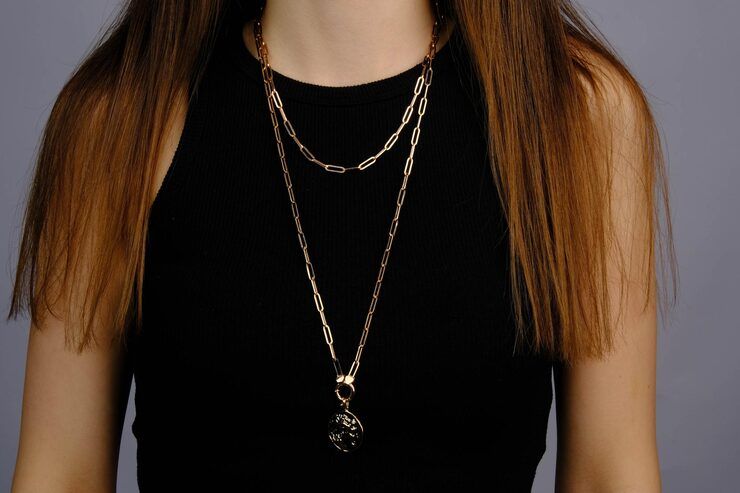
Chunky chain necklaces are jewellery pieces characterized by relatively large, substantial links arranged into a connected necklace structure. Unlike delicate chains that emphasize thin profiles, chunky designs place greater visual emphasis on link size, shape, texture, and proportion.
The style can be produced using gold, silver, platinum, stainless steel, or other metals. Designs range from classic curb and cable chains to contemporary geometric and sculptural forms.
Chunky chains have existed in different forms throughout jewellery history, but modern versions have become particularly associated with statement jewellery and layered styling.
Common Chunky Chain Styles
The appearance of a chunky necklace depends heavily on the link design. Common styles include:
Curb chains
Cuban-link chains
Figaro chains
Rope chains
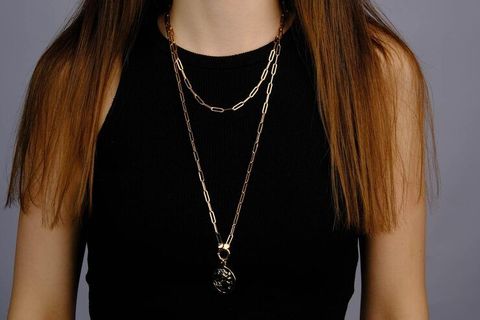
Paperclip chains
Cable chains
Mariner chains
Box chains
Byzantine chains
Geometric sculptural chains
Curb and Cuban-link designs are typically recognized by closely connected links that create a substantial continuous appearance. Paperclip chains use elongated rectangular links, while rope chains create a twisted appearance through multiple interlocking elements.
Materials Used in Chunky Chains
Precious-metal chains can be manufactured from different gold purities, silver, platinum, or combinations of metals.
Gold color can also vary according to alloy composition:
Yellow gold: Traditional warm gold appearance.
White gold: Pale appearance produced through alloying and finishing.
Rose gold: Pink or reddish appearance created through greater copper content.
Silver: Bright, neutral-toned precious metal.
Platinum: Dense, naturally white precious metal.
| Chain Characteristic | What It Influences |
|---|---|
| Link size | Overall visual presence |
| Link shape | Style and flexibility |
| Metal purity | Precious-metal content |
| Chain width | Proportion and appearance |
| Link thickness | Weight and structural character |
| Clasp | Security and usability |
| Surface finish | Reflectivity and texture |
| Necklace length | Placement on the neckline |
Why Chunky Chain Necklaces Matter Today
Chunky chains occupy an important position in the wider fine jewellery, gold chain, luxury jewellery, designer necklaces, and statement jewellery markets.
Their strong visual profile allows a relatively simple outfit to be paired with a more prominent accessory. At the same time, chunky chains can be incorporated into layered jewellery arrangements.
Statement Jewellery
Chunky chains are often categorized as statement jewellery because the chain itself becomes a major visual element rather than functioning only as a support for a pendant.
Designers can create visual variation through:
Oversized links
Mixed metals
Textured surfaces
Alternating link shapes
Polished and matte finishes
Sculptural forms
Integrated pendants
Layering and Personal Styling
Chunky chains can also be combined with thinner necklaces. A larger chain can create a central visual layer while smaller chains provide contrast.
Necklace length affects the final appearance considerably. Shorter chunky chains generally sit closer to the neck, while longer designs create a more vertical visual effect.
Construction and Durability
The size of a chain does not automatically determine its structural strength. Link thickness, metal composition, connection points, soldering, clasp construction, and manufacturing quality all influence durability.
For frequently worn jewellery, areas around the clasp and individual link connections deserve particular attention.
Recent Jewellery Trends in 2025–2026
Jewellery trends during 2025 and 2026 have been influenced by changing gold prices, lightweight construction, personalization, mixed metals, and renewed interest in distinctive jewellery forms.
Gold Market Conditions
The World Gold Council reported that global jewellery demand volume declined 18% during 2025 to 1,542 tonnes, while the value of global jewellery demand increased 18% to a record US$172 billion.
The divergence between volume and value illustrates the influence of elevated gold prices on jewellery purchasing patterns.
Lightweight Adaptations
In July 2026, the World Gold Council reported that global jewellery demand volume declined 17% year over year in Q2 2026, while the value of jewellery demand increased 14%. The report also identified lightweight jewellery as an important adaptation to high gold prices.
This development is relevant to chunky chain necklaces because designers can create a substantial visual profile without necessarily using extremely heavy solid links.
Possible approaches include:
Hollow or semi-hollow construction
Larger but thinner links
Tubular link structures
Lightweight geometric designs
Reduced overall necklace length
The structural characteristics of each design should be evaluated individually because lighter construction can behave differently from solid links.
Mixed-Metal Jewellery
Combining yellow gold, white-toned metals, and other finishes has become an important design direction in contemporary jewellery. Mixed-metal chunky chains can provide contrast without requiring additional decorative components.
Textured Surfaces
Brushed, hammered, matte, and satin surfaces can give large links more visual depth. Designers may combine textured links with polished edges to create differences in light reflection.
Laws, Hallmarking and Jewellery Policies in India
India provides an important regulatory example because precious-metal jewellery is subject to BIS hallmarking requirements in covered categories and districts.
Hallmarking concerns metal purity rather than the aesthetic characteristics of a chunky chain.
BIS Gold Hallmarking
The Bureau of Indian Standards explains that hallmarking provides an official indication of precious-metal content in covered articles. Applicable gold jewellery can carry the BIS logo, purity/fineness information, and a six-digit Hallmark Unique Identification number.
Recognized gold fineness grades include:
14K — 585
18K — 750
20K — 833
22K — 916
23K — 958
24KS — 995
A chunky chain's large appearance therefore does not by itself indicate its gold purity. Two chains with similar dimensions can have different metal compositions.
2025–2026 Hallmarking Developments
BIS continued updating India's mandatory hallmarking framework during 2025 and 2026. The current BIS framework lists amendments dated July 31, 2025, March 2, April 28, and August 3, 2026.
In March 2026, BIS announced the addition of seven districts under the sixth phase of mandatory hallmarking coverage.
Because requirements and coverage can change, current BIS information should be checked for the applicable district, article category, and transaction circumstances.
Metal Identification
A BIS hallmark is useful for determining the applicable purity marking on covered gold jewellery. It should not be confused with an independent valuation or an assessment of the chain's overall craftsmanship.
For precious-metal jewellery containing gemstones or unusual materials, separate documentation may be relevant.
Tools and Resources for Chunky Chain Necklaces
Understanding a chunky chain involves more than measuring its width. Link dimensions, metal purity, weight, construction, clasp type, and surface treatment can all influence the finished piece.
Useful Resources
BIS Care App: Can help verify HUID information for applicable hallmarked gold jewellery in India.
BIS Hallmarking Portal: Provides information about India's current hallmarking framework.
Digital calipers: Useful for measuring link width and thickness.
Jewellery scales: Measure the overall weight of a necklace.
Gold purity references: Explain differences between karat grades.
Chain-length guides: Help compare necklace placement and proportions.
Jewellery CAD software: Allows designers to model link dimensions and connections.
3D modelling tools: Useful for evaluating complex chain geometries.
Metal density calculators: Help estimate theoretical weight from dimensions and material density.
Jewellery inspection loupes: Help examine link connections, clasps, and surface details.
World Gold Council research: Provides current information about gold demand and jewellery-market developments.
Measurements Worth Comparing
When researching chunky gold chain necklaces, useful specifications include:
Necklace length
Overall width
Individual link dimensions
Link thickness
Total weight
Gold purity
Metal color
Surface finish
Clasp type
Flexibility
Construction method
A wider chain is not necessarily heavier than another chain of similar width. Hollow, tubular, and lightweight construction can substantially change total metal weight.
Frequently Asked Questions
What is a chunky chain necklace?
A chunky chain necklace is a necklace with relatively large or substantial links that create a prominent visual profile. It can be produced in gold, silver, platinum, stainless steel, or other metals.
Which chain styles are considered chunky?
Cuban-link, curb, paperclip, mariner, rope, and oversized cable chains can all be produced in chunky formats. The term generally describes the scale and visual weight rather than one specific chain structure.
Are chunky gold chains always solid?
No. Some designs use solid links, while others use hollow, tubular, or semi-hollow construction to reduce overall weight while maintaining a larger visual profile.
How can gold purity be checked in India?
For applicable hallmarked gold jewellery, consumers can inspect the BIS hallmark and HUID and use the BIS Care App for verification. Current hallmarking requirements should be checked through BIS because the regulatory framework can be amended.
What affects the durability of a chunky chain?
Durability depends on metal composition, link thickness, connection points, soldering or manufacturing technique, clasp construction, and how the necklace is worn. Large links are not automatically stronger than smaller links.
Conclusion
Chunky chain necklaces have evolved from traditional chain structures into a broad category of contemporary jewellery characterized by large links, strong proportions, and distinctive surface treatments.
Their appeal comes from their ability to function as statement jewellery while remaining adaptable to different styling approaches. Cuban, curb, paperclip, mariner, rope, and geometric designs can all create different visual effects.
Recent gold-market conditions have also influenced chain construction. Global jewellery volumes declined during 2025 and 2026 while jewellery demand value remained comparatively strong, encouraging greater attention to lightweight designs and efficient metal use.
In India, BIS hallmarking provides an important framework for identifying the purity of applicable gold jewellery. The hallmark identifies metal purity; it does not independently establish the chain's construction quality, market value, or durability.
For anyone researching chunky gold chains, Cuban link necklaces, designer chain necklaces, or luxury gold jewellery, the most useful factors to examine are link design, dimensions, construction, metal purity, weight, clasp structure, surface finish, and hallmark information.
The continued evolution of chunky chains demonstrates how traditional jewellery structures can be adapted through modern manufacturing, lightweight construction, mixed metals, and contemporary surface treatments.