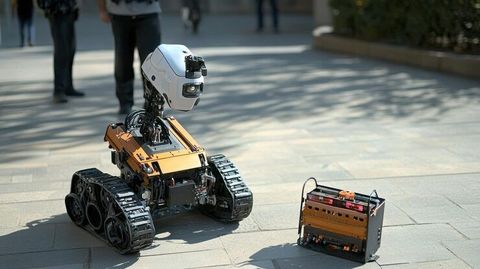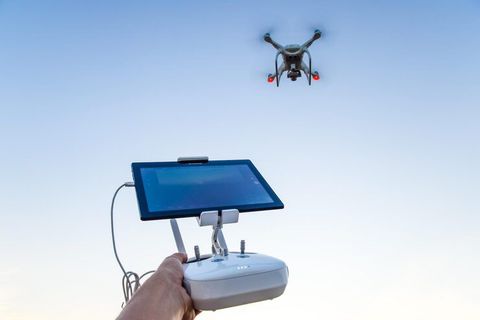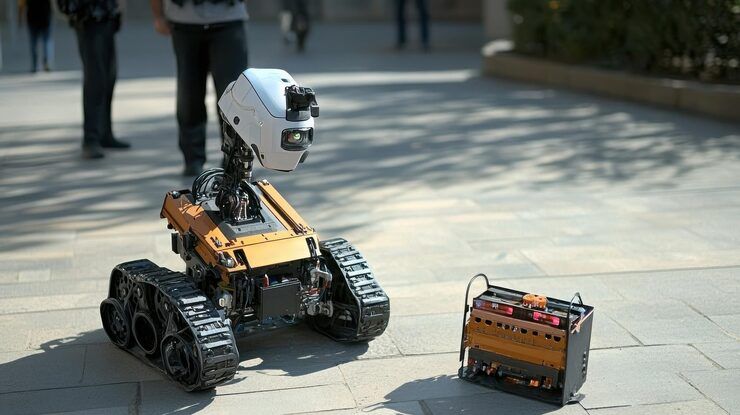
Sensor-driven autonomous robotics refers to robotic systems that use sensors, computing hardware, and control software to understand their surroundings and perform tasks with limited direct human control. These systems collect information about nearby objects, movement, distance, temperature, position, and other environmental conditions to determine how they should respond.
Autonomous robotics is increasingly relevant in manufacturing, warehouses, agriculture, healthcare, transportation, and scientific research. Robots can use sensor information to navigate unfamiliar spaces, identify objects, follow planned routes, detect obstacles, and adapt their movements to changing conditions.
The level of autonomy varies. Some robots follow predefined routes and stop when an obstacle appears, while more advanced systems combine sensor data with artificial intelligence to interpret complex environments and make decisions.
Understanding the Main Components
A sensor-driven autonomous robot combines several technologies that work together to support perception, decision-making, and movement.
Sensors collect information about the environment. Common examples include cameras, LiDAR, ultrasonic sensors, radar, infrared sensors, inertial measurement units, and wheel encoders.
Computing hardware processes sensor measurements and runs navigation, perception, and control algorithms. Depending on the application, this may involve an embedded computer, industrial controller, or dedicated AI processor.
Software interprets incoming information, estimates the robot's position, identifies obstacles, and selects actions. Some systems use rule-based logic, while others incorporate machine learning.
Actuators and control systems convert decisions into physical movement. Motors, steering mechanisms, robotic arms, brakes, and grippers allow the robot to carry out its intended task.
Common Types of Robotics Sensors
Different sensors provide different types of information. Combining them can improve reliability when one sensor performs poorly under particular conditions.
LiDAR: Uses laser measurements to estimate distances and construct representations of surrounding objects.
Machine vision cameras: Capture images for object detection, visual inspection, and navigation.
Ultrasonic sensors: Measure distance using sound waves, often for short-range obstacle detection.
Radar: Measures the distance and movement of objects using radio waves.
Inertial measurement units: Estimate acceleration and rotational movement.
Wheel encoders: Measure wheel rotation to estimate movement.
Force and torque sensors: Measure contact forces in robotic manipulation.
Temperature sensors: Monitor environmental or equipment temperatures.
No single sensor is ideal for every environment. A warehouse robot may combine cameras, LiDAR, and wheel encoders, while an agricultural robot may require cameras, satellite positioning, and specialized sensors for soil or crops.
How Autonomous Robot Navigation Works
Sensor-driven navigation typically involves several connected stages.
Perception: The robot collects information about obstacles, surfaces, objects, and environmental conditions.
Localization: It estimates its position relative to a map or other reference. Some robots use simultaneous localization and mapping, commonly called SLAM, to build a map while estimating their location within it.
Planning: Navigation software identifies a route or sequence of movements that meets the task's objectives and safety constraints.
Control: The robot adjusts its motors, steering, or other mechanisms to follow the planned movement.
Feedback: New sensor measurements are compared with expected conditions. The robot can then correct its position, change direction, slow down, or stop when necessary.
This continuous feedback process allows autonomous robots to respond to changing surroundings rather than relying entirely on a fixed sequence of movements.
Importance of Sensor-Driven Autonomous Robotics
Sensor-driven autonomous robotics is important because it enables machines to operate in environments where conditions may change from moment to moment. By combining sensor measurements with navigation and control software, robots can perform repetitive or physically demanding tasks while responding to obstacles and unexpected events.
Industrial Automation and Manufacturing
Manufacturing facilities use robotic systems for material handling, assembly, inspection, and internal transportation. Sensor feedback helps robots position components accurately, detect objects, and respond to changes in production workflows.
Potential applications include:
Automated assembly and component placement
Machine vision inspection
Robotic picking and sorting
Warehouse material transportation
Equipment condition monitoring
Precision handling of industrial components
Warehousing and Logistics
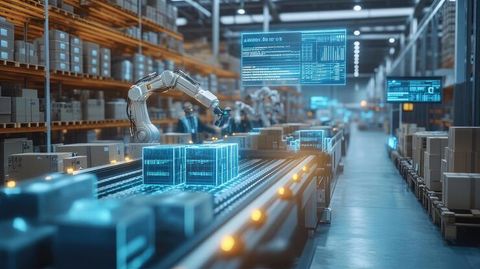
Autonomous mobile robots can transport materials between storage areas, workstations, and loading zones. Sensors help them identify obstacles, navigate shared spaces, and adjust routes when aisles become blocked.
Their effectiveness depends on reliable navigation, suitable infrastructure, battery management, and coordination with people and other machines.
Agriculture and Environmental Monitoring
Agricultural robots can use cameras, positioning systems, and other sensors to identify crops, navigate fields, monitor plant conditions, and support precision farming.
Environmental robots may collect measurements in locations that are difficult or dangerous for people to access, including industrial facilities, underwater environments, and areas affected by natural disasters.
Safety and Operational Limitations
Autonomy does not mean that a robot can operate safely in every situation. Sensors may be affected by dust, glare, rain, vibration, reflective surfaces, or obstructed views.
Robotic systems therefore require testing, fault detection, maintenance, and appropriate human oversight. High-risk operations may also require physical barriers, emergency stops, and independent safety systems.
Recent Developments in Autonomous Robotics
During 2025 and 2026, robotics research and industrial development continued to focus on combining multiple sensor types, improving AI-based perception, and enabling robots to perform a wider range of tasks in changing environments.
Vision-Language-Action Models
A notable direction is the development of vision-language-action models. These systems combine visual information, language-based instructions, and action prediction to help robots interpret tasks and determine appropriate movements.
In 2025, research and demonstrations from major robotics laboratories increasingly explored how such models could support manipulation and task execution. These approaches remain dependent on training quality, hardware capabilities, and the environment in which a robot operates.
Improved Sensor Fusion
Sensor fusion combines measurements from different sources to create a more complete understanding of the environment.
For example, a mobile robot may combine LiDAR distance measurements, camera images, and inertial data to estimate its position. In 2025–2026, improvements in computing hardware and perception algorithms continued to support more sophisticated real-time processing.
However, combining sensors also introduces challenges involving calibration, synchronization, data quality, and computational requirements.
Simulation and Digital Twins
Robotics developers increasingly use simulation environments and digital twins to test navigation, collision avoidance, and robotic manipulation before deploying systems in physical environments.
These tools allow engineers to evaluate many operating scenarios, including unusual obstacles and equipment failures, without relying entirely on physical testing. Simulation results still require validation against real-world conditions.
Human-Robot Collaboration
Another continuing development is the use of robots in workplaces shared with people. Improved perception and force sensing can help systems detect nearby workers and adjust their movements.
Such capabilities do not replace formal risk assessments or safety-rated protective equipment. Human-robot collaboration requires appropriate system design, validation, and operating procedures.
Laws, Policies, and Safety Standards
Autonomous robotics is affected by workplace safety laws, machinery requirements, data protection rules, and industry-specific regulations. The applicable framework depends on the country, robot type, and intended use.
International Robotics Safety Standards
The ISO 10218 series addresses safety requirements for industrial robots and industrial robot applications. ISO/TS 15066 provides additional guidance for collaborative industrial robot systems.
These standards help engineers assess hazards involving robot movement, trapping, impact, and interaction with workers. Their legal status depends on national adoption and the requirements applicable to a particular installation.
United States Regulations
In the United States, workplace robotics may fall under Occupational Safety and Health Administration requirements covering machine guarding, hazardous energy control, and workplace safety.
Facilities should assess risks associated with moving machinery, unexpected activation, electrical equipment, and maintenance activities. Additional rules may apply in specialized environments such as healthcare, transportation, and food processing.
European Union Requirements
The European Union has introduced a regulatory framework for machinery safety and artificial intelligence. The Machinery Regulation (EU) 2023/1230 is scheduled to apply from January 20, 2027, replacing the previous Machinery Directive framework.
The EU Artificial Intelligence Act also establishes requirements for certain AI applications according to their risk classification. Whether a particular robotic system falls under specific provisions depends on its design, intended use, and applicable legislation.
Data Privacy and Sensor Information
Robots equipped with cameras, microphones, or location-tracking systems may collect information relating to identifiable people.
Organizations should assess applicable privacy requirements, restrict unnecessary data collection, control access to recordings, and establish appropriate retention procedures. In the European Union, the General Data Protection Regulation may apply when personal data is processed.
Tools and Resources for Robotics Development
Several software platforms and engineering resources support the design, testing, and operation of autonomous robotic systems.
Robotics Software
Robot Operating System (ROS 2): Provides software libraries and communication tools for robotics development.
Gazebo: Supports simulation of robotic systems and their environments.
OpenCV: Provides computer vision tools for image processing and visual recognition.
Open3D: Supports processing and visualization of three-dimensional data.
Nav2: Provides navigation capabilities for mobile robots operating within the ROS 2 ecosystem.
Engineering and Evaluation Tools
Robotics teams may use simulation software, sensor calibration utilities, data logging tools, and performance dashboards to evaluate system behavior.
Useful measurements include:
| Metric | Purpose |
|---|---|
| Localization error | Measures position-estimation accuracy |
| Obstacle detection rate | Evaluates detection performance |
| Navigation completion rate | Measures successful route completion |
| Response latency | Measures time between sensing and action |
| Battery consumption | Estimates operating endurance |
| Collision and near-miss records | Supports safety evaluation |
| Sensor availability | Tracks faults and data interruptions |
These measurements should be tested under representative operating conditions rather than relying solely on laboratory demonstrations.
Frequently Asked Questions
What is sensor-driven autonomous robotics?
It is the use of sensors, computing systems, and control software to help robots perceive their surroundings, make decisions, and perform tasks with limited direct human control.
Which sensors are commonly used in autonomous robots?
Common sensors include cameras, LiDAR, radar, ultrasonic sensors, inertial measurement units, wheel encoders, and force sensors. The combination depends on the robot's purpose and operating environment.
What is sensor fusion in robotics?
Sensor fusion combines information from multiple sensors to improve environmental understanding or position estimation. For example, combining camera images with LiDAR measurements can help a robot detect and locate obstacles.
Can autonomous robots operate without human supervision?
Some robots can perform specific tasks with limited supervision in controlled environments. However, monitoring, maintenance, emergency procedures, and human intervention may still be necessary, especially in complex or hazardous settings.
What industries use autonomous robotic systems?
Industries include manufacturing, warehousing, agriculture, healthcare, transportation, mining, environmental research, and infrastructure inspection. Applications vary according to safety requirements, technical complexity, and operating conditions.
Conclusion
Sensor-driven autonomous robotics combines perception, artificial intelligence, navigation, and motion control to help machines respond to changing environments. Applications range from factory automation and warehouse transportation to agricultural monitoring and hazardous-site inspection.
Developments in sensor fusion, AI-based perception, simulation, and collaborative robotics are expanding the capabilities of these systems. At the same time, environmental limitations, equipment reliability, privacy, and workplace safety remain important considerations.
Successful implementation requires selecting suitable sensors, validating navigation and control software, testing realistic operating conditions, and following applicable safety and regulatory requirements. With careful engineering and appropriate oversight, sensor-driven autonomous robotics can support more adaptable and efficient industrial and research operations.