Metal polishing machines are industrial tools designed to improve the surface appearance, smoothness, and consistency of metal components. They are used in manufacturing facilities, metal fabrication workshops, automotive production, aerospace manufacturing, medical equipment production, and other industries where surface quality is important.
Metal components may develop scratches, machining marks, oxidation, burrs, or uneven textures during manufacturing. Polishing machines help reduce these imperfections and produce a surface that meets specific technical or visual requirements.
The appropriate machine depends on the metal being processed, the component's shape, the desired surface finish, production volume, and applicable quality standards. Some systems use abrasive belts or polishing wheels, while others use vibratory finishing, robotic tools, or computer-controlled equipment.
Understanding Metal Polishing Equipment
Metal polishing is part of the broader surface finishing process. Depending on the application, it may follow cutting, grinding, machining, welding, or deburring.
Polishing machines work by removing small amounts of material or smoothing surface irregularities through controlled contact with an abrasive medium. The result can range from a uniform matte appearance to a reflective finish.
Common types of equipment include:
Belt polishing machines: Use abrasive belts to smooth flat surfaces, edges, and selected curved components.
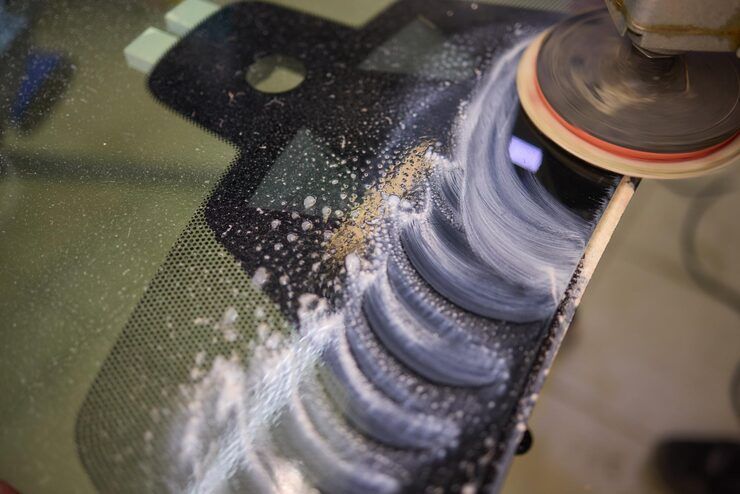
Buffing machines: Use rotating wheels and polishing compounds to improve surface appearance.
Vibratory finishing machines: Move components and finishing media together to smooth edges and reduce surface irregularities.
Centrifugal finishing machines: Use controlled mechanical movement to accelerate finishing for suitable small components.
CNC polishing machines: Use computer-controlled movements to maintain consistent tool paths and processing parameters.
Robotic polishing systems: Use programmed robotic arms to polish components with complex shapes or repetitive finishing requirements.
Electropolishing systems: Use an electrochemical process to remove a controlled amount of material from suitable metal surfaces.
These technologies are not interchangeable. A polishing wheel suitable for stainless steel sheet metal may not be appropriate for delicate medical components or intricate precision parts.
How the Metal Polishing Process Works
A typical metal polishing process begins with inspecting the component and determining the required finish.
Surface preparation: The component is cleaned and, when necessary, ground or deburred to remove larger imperfections.
Abrasive selection: The operator selects a suitable abrasive, polishing wheel, belt, compound, or finishing medium based on the material and desired result.
Initial polishing: Coarser abrasives may be used to remove visible machining marks or surface irregularities.
Fine polishing: Finer abrasives or polishing compounds reduce remaining marks and create a more uniform finish.
Cleaning and inspection: Residues are removed, and the finished component is checked for scratches, dimensional changes, contamination, and surface consistency.
Not every component requires every stage. A decorative metal panel may need a reflective finish, while an industrial component may require controlled roughness rather than a mirror-like appearance.
Why Metal Polishing Machines Matter
Metal polishing equipment helps manufacturers achieve repeatable surface quality and prepare components for their intended applications.
Manufacturing Quality
Surface finish can affect the appearance, cleanliness, friction, corrosion behavior, and performance of a metal component.
For example, stainless steel equipment used in food processing may require surfaces that are easier to clean. Precision components may require a defined surface roughness to meet engineering specifications.
Polishing must be selected carefully because excessive material removal can change dimensions, damage edges, or affect a component's functional properties.
Industrial Applications
Metal polishing machines are used across several industries:
Automotive manufacturing: Finishing selected metal trim, components, and hardware.
Aerospace: Processing approved components according to engineering specifications.
Medical equipment: Preparing suitable stainless steel and other metal surfaces.
Food processing: Finishing compatible equipment surfaces to support cleaning and hygiene.
Architecture: Polishing stainless steel panels, railings, and decorative metalwork.
Electronics: Finishing metal housings and selected precision components.
General fabrication: Smoothing welds, removing burrs, and improving surface uniformity.
Choosing the Right Machine
Selecting industrial metal polishing equipment requires evaluating the complete process rather than focusing only on machine speed or power.
Important considerations include:
Metal type and hardness
Component dimensions and geometry
Required surface roughness
Desired appearance
Material removal limits
Production throughput
Abrasive consumption
Dust and heat management
Maintenance requirements
Operator safety
A suitable finishing plan should define measurable quality requirements, including surface roughness where necessary, instead of relying only on visual inspection.
Recent Developments in Metal Polishing Technology
Developments during 2025 and 2026 have continued to emphasize automation, process monitoring, precision finishing, and more efficient use of manufacturing resources.
Robotic Polishing and Automation
Robotic polishing systems are increasingly relevant for repetitive industrial finishing tasks. Programmable robots can maintain tool paths, pressure, speed, and contact angles across suitable component geometries.
Force sensors and machine vision can help systems respond to changes in component position or surface conditions. However, successful implementation depends on programming, workpiece consistency, process validation, and appropriate safety systems.
Artificial Intelligence and Process Monitoring
Manufacturers are exploring data-driven approaches to surface finishing. Sensors can monitor vibration, tool wear, motor load, temperature, and other process variables.
These measurements can help identify deviations and support preventive maintenance. Artificial intelligence may assist with detecting defects or adjusting selected process parameters, but performance depends on data quality and the specific application.
Precision and Sustainable Finishing
Manufacturing research continues to examine methods that reduce unnecessary material removal, abrasive consumption, energy use, and process waste.
Electropolishing and other specialized finishing methods are also important in applications where surface cleanliness, corrosion resistance, or precise surface characteristics are required.
These developments do not mean that every polishing process needs advanced automation. Manual and conventional machines remain suitable for many low-volume, irregular, or specialized components.
Laws, Regulations, and Workplace Safety
Metal polishing facilities must comply with applicable workplace safety, environmental, electrical, and machinery requirements. The precise obligations depend on the country, industry, and materials being processed.
Occupational Safety in the United States
The US Occupational Safety and Health Administration establishes requirements relevant to machine guarding, abrasive wheel safety, respiratory protection, and workplace exposure.
Polishing operations can produce metal dust, abrasive particles, noise, sparks, and heat. Suitable safeguards may include properly designed machine guards, eye and face protection, local exhaust ventilation, and appropriate respiratory protection when required.
Abrasive wheels must be compatible with the equipment's rated operating speed and inspected according to applicable requirements.
Environmental Controls
Metal polishing may generate dust, spent abrasives, polishing compounds, and contaminated wastewater.
Facilities may need to follow air-emission requirements, hazardous-waste rules, wastewater controls, and chemical-handling regulations. Electrochemical polishing can introduce additional requirements related to process chemicals and waste treatment.
Standards and Quality Management
Manufacturers may use recognized technical standards to specify surface roughness, dimensional tolerances, and inspection methods.
The International Organization for Standardization publishes standards relevant to surface texture measurement and quality management. The applicable standard depends on the component and its intended use.
A written process specification helps maintain consistent results and supports traceability in regulated manufacturing environments.
Tools and Resources for Metal Polishing
Technical resources can help manufacturers compare equipment, select abrasives, measure surface quality, and plan maintenance.
Surface Roughness Measurement
Surface roughness testers and profilometers measure characteristics such as Ra, the arithmetic average roughness, and other parameters used in engineering specifications.
Measurement is particularly useful when a component must meet defined finishing requirements rather than a general visual standard.
Equipment Selection Checklist
| Evaluation Factor | Information to Record |
|---|---|
| Workpiece material | Stainless steel, aluminum, brass, or another metal |
| Component geometry | Flat, cylindrical, curved, or intricate |
| Required finish | Matte, satin, polished, or specified roughness |
| Production volume | Components processed per shift |
| Machine configuration | Belt, wheel, vibratory, CNC, or robotic |
| Process consumables | Abrasives, compounds, and finishing media |
| Safety requirements | Guards, ventilation, and protective equipment |
| Quality control | Inspection method and acceptance criteria |
Manufacturer Documentation
Equipment manuals and technical data sheets can provide information about operating speed, abrasive compatibility, machine capacity, maintenance intervals, and safety requirements.
Digital Maintenance Tools
Computerized maintenance management systems and production spreadsheets can track inspection schedules, abrasive replacement, machine downtime, energy consumption, and quality results.
These records help identify recurring problems and evaluate whether a finishing process is operating consistently.
Frequently Asked Questions
What are metal polishing machines used for?
They improve the surface finish of metal components by reducing scratches, machining marks, burrs, and surface irregularities. Applications range from decorative metalwork to precision industrial components.
Which metals can be polished using these machines?
Many systems can process stainless steel, aluminum, brass, copper, and other metals. The appropriate machine, abrasive, and polishing compound depend on the material's hardness, geometry, and finishing requirements.
What is the difference between polishing and buffing?
Polishing generally focuses on improving surface smoothness and removing imperfections. Buffing commonly uses softer wheels and polishing compounds to improve appearance and produce a brighter finish. The terms can overlap in industrial practice.
Are automated metal polishing machines suitable for every factory?
No. Automation is most useful when component geometry, production volume, and process requirements justify the additional setup and programming. Conventional equipment may be more appropriate for small batches or highly varied components.
How is metal surface quality measured?
Surface quality can be assessed visually and through instruments such as profilometers or surface roughness testers. The appropriate measurement method depends on the component's functional requirements and applicable specifications.
Conclusion
Metal polishing machines are important tools for improving surface quality, consistency, and appearance across modern manufacturing industries. Belt polishers, buffing machines, vibratory finishing equipment, CNC systems, robotic cells, and electropolishing systems each serve different technical requirements.
Recent developments in automation, sensor-based monitoring, and precision finishing are creating additional ways to improve repeatability and process control. However, successful results still depend on appropriate abrasive selection, careful preparation, suitable operating parameters, and reliable quality inspection.
Manufacturers evaluating metal finishing equipment should consider the material, component geometry, required surface characteristics, throughput, maintenance, environmental controls, and workplace safety. A clearly defined process helps ensure that the finished component meets its intended requirements while supporting consistent and responsible production.