Floating TV cabinet designs are a popular feature in contemporary interior design. These cabinets are mounted on a wall rather than resting directly on the floor, creating an open area beneath the unit. They can provide storage for electronic devices, remote controls, gaming accessories, and other living room essentials while maintaining a clean, organized appearance.
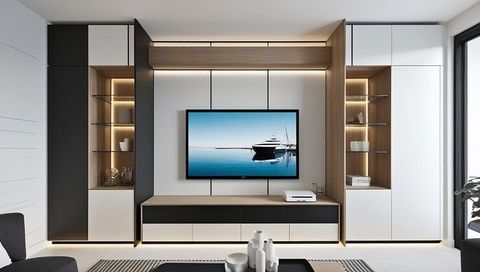
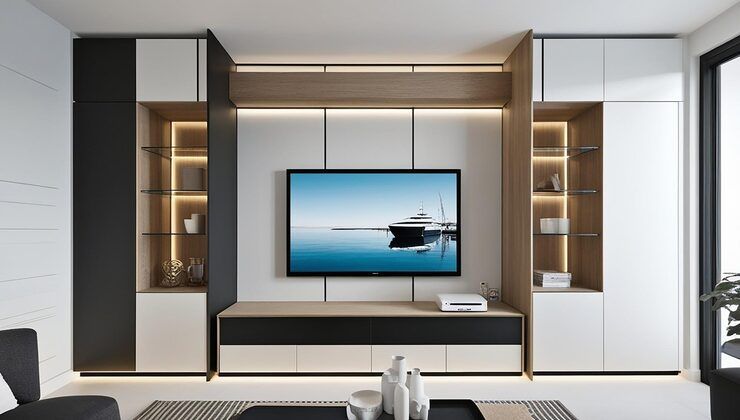
A floating TV cabinet typically forms part of a larger entertainment wall that may include a wall-mounted television, decorative panels, concealed wiring, shelves, lighting, and storage compartments. The design can range from a simple rectangular cabinet to a complete media wall with integrated architectural details.
The main purpose of a floating TV unit is to combine practical storage with an uncluttered layout. Its suitability depends on wall construction, cabinet dimensions, storage requirements, television placement, and the overall design of the room.
Understanding Floating TV Cabinet Designs
Floating TV cabinets are usually attached to structural supports or an appropriate wall-mounting system. Because the cabinet does not touch the floor, the surrounding space can appear more open, especially in smaller living rooms and apartments.
The cabinet may contain drawers, hinged doors, open compartments, or a combination of storage arrangements. Some designs also include cable-management channels and ventilation openings for electronic equipment.
Common styles include:
Minimalist cabinets: Simple shapes, smooth surfaces, and limited decoration.
Wooden floating units: Natural wood tones or wood-look finishes that add warmth.
Gloss-finish cabinets: Reflective surfaces that complement contemporary interiors.
Handleless cabinets: Push-to-open mechanisms or recessed handles for a streamlined appearance.
Floating media walls: Cabinets combined with decorative wall panels and shelving.
Modular TV units: Separate components arranged to suit different room dimensions.
Corner-oriented designs: Configurations developed for rooms with limited wall space.
The right design depends on the room's proportions, the television's dimensions, the amount of equipment being stored, and the available wall structure.
Materials and Finishes
Material selection affects the appearance, durability, maintenance requirements, and structural weight of a floating cabinet.
Engineered wood products, plywood, solid wood, metal components, glass, and laminate finishes are commonly used in entertainment furniture. Each material has different performance characteristics.
| Material | Main Characteristics | Important Consideration |
|---|---|---|
| Plywood | Layered construction and useful structural strength | Quality and thickness vary |
| MDF | Smooth surface suitable for painted finishes | Requires protection from moisture |
| Particleboard | Common in manufactured furniture | Edge protection and load limits matter |
| Solid wood | Natural grain and distinctive appearance | Weight and seasonal movement |
| Metal | Useful for brackets and structural supports | Corrosion protection may be necessary |
| Glass | Creates a lighter visual appearance | Requires suitable safety-rated glass |
The cabinet's mounting system must be compatible with its material, dimensions, and intended load.
Importance of Floating TV Cabinets
Floating TV cabinets address several common interior-design challenges, including limited floor space, visible cables, disorganized electronic accessories, and inconsistent furniture layouts.
Better Use of Living Room Space
The open floor area beneath a floating cabinet can make a room feel less crowded. This can be particularly helpful in compact apartments, narrow living rooms, and multifunctional spaces.
The visual effect depends on cabinet depth, wall color, surrounding furniture, and the amount of decoration on the wall.
Storage and Organization
A well-planned television cabinet can keep everyday items organized and reduce visible clutter.
Useful storage features include:
Drawers for remote controls and small accessories
Closed compartments for electronic equipment
Open shelves for devices requiring airflow
Cable-management openings
Compartments for gaming consoles
Space for routers and media players
Electronic devices that generate heat should not be placed in sealed compartments without appropriate ventilation.
Easier Floor Cleaning
Because the cabinet sits above the floor, a vacuum cleaner or mop can reach the area beneath it more easily. However, the mounting height should still allow practical access without creating an awkward gap or exposing cables.
Visual Balance
A floating cabinet can help establish a clear horizontal line beneath the television. Designers often coordinate the cabinet's width with the screen, wall panels, lighting, and surrounding furniture to create a balanced composition.
Recent Design Trends in 2025 and 2026
Interior design continues to emphasize practical storage, natural-looking materials, flexible layouts, and integrated technology. Floating TV cabinets reflect these preferences because they combine storage with a relatively streamlined appearance.
Natural Materials and Warm Colors
Warm wood tones, textured finishes, muted beige shades, and earthy colors have remained prominent in contemporary interior design discussions during 2025 and 2026.
These finishes can soften the appearance of large television screens and complement flooring, sofas, and other furniture.
Integrated Lighting
LED lighting is frequently incorporated beneath floating cabinets, behind wall panels, or within open shelves. Indirect lighting can highlight architectural details and provide ambient illumination.
Lighting placement should avoid distracting reflections on the television screen. Electrical components should also be installed according to applicable safety requirements.
Concealed Technology
Cable-management systems and discreet equipment compartments remain important design considerations. Wall-mounted televisions can create visible cable problems when power cords, HDMI cables, and network connections are not planned in advance.
Some cabinets include removable rear panels, cable channels, and separate compartments for different devices.
Flexible and Modular Layouts
Modular entertainment units allow cabinets, shelves, and decorative panels to be arranged around different room dimensions. This approach can be useful when the television, sound system, or storage requirements change.
These are broad design trends rather than universal requirements. A suitable cabinet should prioritize room layout, durability, safety, and the user's actual storage needs.
Laws, Building Rules, and Installation Safety
Floating TV cabinets are household furniture, but their installation can involve building safety, electrical work, and wall-mounting considerations. Applicable rules depend on the country, local building regulations, and the type of property.
Wall Structure and Load Capacity
The wall must support the combined weight of the cabinet, stored objects, and any equipment attached to it. Suitable mounting methods differ between concrete, brick, timber framing, and hollow-wall construction.
Installers should identify structural supports and use fixings appropriate to the wall material. Ordinary drywall anchors should not automatically be assumed suitable for a heavy cabinet.
In rental properties or shared buildings, permission may be required before drilling into walls or making permanent alterations.
Electrical and Cable Safety
Electrical outlets and wiring should be positioned to avoid pinching, overheating, and exposed connections.
Electrical modifications should follow the applicable local electrical code and be performed by a qualified electrician where required. Cables should not obstruct ventilation openings or become trapped behind mounting hardware.
Television Mounting
The television's wall bracket must be compatible with its weight, dimensions, and mounting pattern. The cabinet and television should be assessed separately unless they are designed as a combined mounting system.
Children may pull on cabinet doors or drawers, so secure installation and appropriate safety measures are particularly important in family homes.
Tools and Resources for Planning
Several tools can help determine the correct cabinet size, placement, and installation requirements.
Room Measurement Tools
A tape measure or digital measuring tool can establish wall width, ceiling height, available depth, and the distance between the television and nearby furniture.
Record the position of electrical outlets, switches, wall studs, skirting boards, and other obstacles before finalizing the layout.
Interior Design Applications
Room-planning applications can help visualize cabinet dimensions, finishes, television placement, and furniture arrangements before installation.
Useful features include:
Two-dimensional floor plans
Three-dimensional room previews
Furniture dimension libraries
Color and material selection
Wall elevation layouts
Lighting placement
Basic Dimension Checklist
| Measurement | Purpose |
|---|---|
| Wall width | Determines the available cabinet length |
| Cabinet depth | Helps maintain walking clearance |
| Cabinet height | Establishes storage access and visual balance |
| Television width | Supports proportional design |
| Mounting height | Helps position the screen comfortably |
| Equipment dimensions | Ensures devices fit inside compartments |
| Total loaded weight | Helps determine mounting requirements |
These measurements should be verified on site before drilling or installation.
Frequently Asked Questions
What is a floating TV cabinet?
A floating TV cabinet is a wall-mounted storage unit that does not rest directly on the floor. It is commonly used beneath a television to organize media equipment, accessories, and other living room items.
Are floating TV cabinets suitable for small living rooms?
Yes. Their raised design leaves the floor visible beneath the cabinet and can create a more open visual appearance. The actual benefit depends on the cabinet's dimensions, wall layout, and storage requirements.
Which material is suitable for a floating TV unit?
Plywood, MDF, particleboard, solid wood, and metal-supported designs are all used. The appropriate choice depends on the intended load, finish, moisture conditions, durability requirements, and mounting system.
How high should a floating TV cabinet be installed?
There is no single correct height for every room. The position should account for television height, seated viewing comfort, cabinet dimensions, equipment access, and the room's layout. The cabinet should also remain accessible for everyday use.
How can cables be hidden behind a floating TV cabinet?
Cable channels, cable-management openings, wall panels, and appropriately positioned outlets can reduce visible wiring. Electrical work should comply with local requirements, and electronic equipment must have adequate ventilation.
Conclusion
Floating TV cabinet designs combine contemporary interior styling with practical storage and space management. Their raised construction can create a lighter visual appearance, simplify floor cleaning, and provide organized space for television accessories and electronic equipment.
Recent design trends emphasize natural finishes, integrated lighting, modular layouts, and concealed cable management. However, the most important considerations remain cabinet dimensions, material quality, storage requirements, ventilation, and secure wall mounting.
Before installation, measure the room carefully, verify the wall structure, assess the total loaded weight, and plan electrical connections. A well-designed floating TV cabinet should complement the living room while remaining safe, durable, and convenient for everyday use.