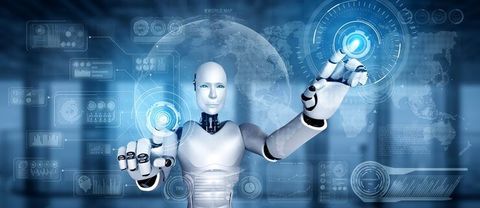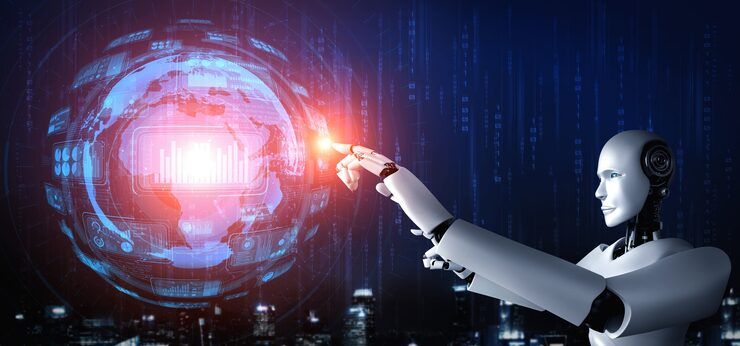
Artificial intelligence (AI) and future technology are changing how people communicate, conduct research, manage information, and perform everyday tasks. AI refers to computer systems designed to perform activities that typically require human intelligence, such as recognizing patterns, understanding language, generating content, solving problems, and supporting decisions.
Future technology includes a wider range of developments, including robotics, quantum computing, biotechnology, advanced materials, renewable energy systems, and next-generation telecommunications. These fields can operate independently or combine with AI to address technical challenges across different industries.
AI development has progressed from specialized systems designed for particular tasks to generative models capable of producing text, images, audio, video, and computer code. However, AI systems differ considerably in their capabilities, reliability, data requirements, and intended applications.
Understanding Major AI Technologies
Several technologies contribute to the development of modern artificial intelligence.
Machine learning enables computer systems to identify patterns in data and improve their performance on specific tasks. It is used in forecasting, image recognition, fraud detection, and recommendation systems.
Deep learning uses multi-layered neural networks to process complex information. It has contributed to advances in speech recognition, computer vision, language processing, and scientific research.
Generative AI produces new content based on patterns learned during training. Depending on the system, it can generate written explanations, summaries, images, audio, and software code.
Robotics and automation combine software with physical machines to perform tasks such as inspection, assembly, material handling, and laboratory operations.
Other important areas include edge computing, which processes information near the devices generating it, and cloud computing, which provides computing resources through remote infrastructure.
How Future Technologies Work Together
AI becomes more useful when combined with reliable data, suitable computing infrastructure, sensors, and established workflows.
For example, an industrial robot may use computer vision to identify an object, AI software to determine its position, and mechanical components to move it. Similarly, a healthcare research system may analyze large datasets to help scientists investigate biological patterns.
These systems generally require testing, monitoring, and human oversight. Their performance depends on the quality of the data, the suitability of the model, and the conditions in which they operate.
Why Artificial Intelligence Matters Today
Artificial intelligence is increasingly used to process large amounts of information, automate repetitive tasks, and support decisions that require pattern recognition. Its value depends on the problem being addressed, the quality of available data, and the reliability of the system.
Business and Industrial Applications
Businesses use AI for data analysis, document processing, demand forecasting, customer communication, and workflow automation. Manufacturing facilities can use computer vision to identify product defects, while logistics organizations can analyze delivery routes and inventory patterns.
Common applications include:
Predictive maintenance in manufacturing
Automated document classification
Customer support and language processing
Cybersecurity threat detection
Supply chain forecasting
Software development assistance
Financial data analysis
AI can improve efficiency in appropriate situations, but results require evaluation. Incorrect predictions, incomplete data, and poorly designed workflows can produce misleading outcomes.
Healthcare and Scientific Research
Researchers use AI to examine medical images, analyze biological data, model proteins, and identify patterns in scientific experiments. These applications can help researchers investigate complex questions more efficiently.
Clinical decisions still require appropriate professional judgment, validated methods, and compliance with applicable medical regulations. AI-generated findings should not automatically be treated as established scientific evidence.
Education and Skills Development
AI-powered learning tools can explain concepts, organize study materials, translate text, and help learners practice unfamiliar subjects. Educators can also use these systems to develop lesson outlines and learning activities.
However, AI-generated answers may contain factual errors. Independent verification and critical thinking remain important skills.
Recent Developments in Artificial Intelligence
Artificial intelligence continued to evolve rapidly during 2025 and 2026, particularly in generative models, automated workflows, computing infrastructure, and regulatory oversight.
AI Agents and Automated Workflows
AI agents are systems designed to complete multiple connected steps toward a defined objective. Depending on their permissions and configuration, they may retrieve information, analyze documents, interact with software, or prepare actions for human approval.
Their growing use has increased attention to access controls, audit records, reliability testing, and human supervision. Systems that can take actions independently require particularly careful safeguards.
Expansion of AI Infrastructure
AI development depends on computing hardware, data centers, electricity, networking, and specialized software. During 2025 and 2026, governments and technology companies continued to focus on expanding AI infrastructure and developing domestic computing capabilities.
These developments raise practical questions about energy consumption, water use, hardware availability, data security, and the environmental effects of large computing facilities.
Artificial Intelligence Regulation in 2026
The European Union's AI Act entered a major implementation phase on August 2, 2026. Following amendments adopted in July 2026, the application dates for certain high-risk AI requirements were extended to December 2, 2027, and August 2, 2028, depending on the system category.
The updated framework also addresses transparency, prohibited uses, governance, and safeguards against harmful applications of AI-generated content.
These developments demonstrate that responsible AI adoption increasingly involves technical evaluation as well as legal and organizational planning.
Laws, Policies, and Responsible AI Use
AI regulation differs between countries. Organizations must consider where a system operates, what information it processes, and whether it affects sensitive decisions or individual rights.
European Union AI Act
The EU AI Act follows a risk-based approach. Certain uses are prohibited, while high-risk applications face additional requirements involving risk management, documentation, oversight, and other safeguards.
Organizations operating in or serving the European market should review the requirements applicable to their particular systems and activities.
United States AI Policy
The United States uses a combination of federal policies, sector-specific regulations, state laws, and existing consumer-protection requirements. Federal AI policy also addresses technological development, infrastructure, national security, and international competitiveness.
Applicable obligations can depend on the industry, the type of AI system, and the location in which it is deployed.
Data Protection and Cybersecurity
AI systems may process personal, financial, medical, or commercially sensitive information. Organizations should establish clear rules for data collection, retention, access, and use.
Responsible practices include:
Obtaining appropriate permissions for data use
Protecting confidential information
Testing systems for bias and reliability
Reviewing outputs before consequential decisions
Maintaining records of important AI-assisted actions
Providing appropriate human oversight
Monitoring systems after deployment
Compliance with AI-specific rules does not replace obligations under privacy, intellectual property, cybersecurity, or consumer-protection laws.
Tools and Resources for Exploring Future Technology
A practical AI learning plan combines experimentation with technical education and independent verification.
AI Development and Research Tools
Useful categories include machine-learning frameworks, data-analysis platforms, cloud computing environments, code editors, and model evaluation tools.
These resources help learners understand how AI systems are developed, tested, and integrated into applications.
Technology Research Resources
University research publications, government technology reports, standards organizations, and technical documentation can help readers distinguish established capabilities from experimental findings.
AI Evaluation Checklist
Evaluation Factor | Key Question |
|---|---|
Accuracy | Does the system produce reliable results? |
Data quality | Is the input information suitable? |
Privacy | Is sensitive information protected? |
Security | Can unauthorized users access the system? |
Transparency | Can users understand important limitations? |
Human oversight | Can people review consequential decisions? |
Energy use | Are computing requirements understood? |
This checklist can help individuals and organizations evaluate whether an AI application is appropriate for a particular task.
Frequently Asked Questions
What is artificial intelligence?
Artificial intelligence refers to computer systems designed to perform tasks such as language processing, pattern recognition, prediction, content generation, and decision support.
Which technologies are likely to influence the future?
AI, robotics, quantum computing, biotechnology, advanced materials, renewable energy, and next-generation communications are important areas of ongoing research and development. Their practical effects will depend on scientific progress, adoption, safety, and regulation.
Can AI replace human decision-making?
AI can automate certain tasks and support decisions, but it does not reliably replace human judgment in every situation. Complex, sensitive, or high-impact decisions often require qualified human oversight.
What risks are associated with artificial intelligence?
Risks include inaccurate outputs, privacy violations, cybersecurity threats, biased results, misinformation, intellectual property disputes, and potential changes to employment. Appropriate safeguards depend on the application.
How can beginners learn about AI?
Beginners can start with introductory machine-learning courses, basic programming, data literacy, AI experimentation, and research into responsible technology practices. Testing examples and verifying results help build a practical understanding of both capabilities and limitations.
Conclusion
Artificial intelligence and future technology are influencing research, business operations, manufacturing, education, communications, and scientific discovery. Machine learning, generative AI, robotics, and advanced computing each contribute different capabilities to this changing technological landscape.
Recent developments in AI agents, computing infrastructure, and regulatory frameworks demonstrate that innovation must be considered alongside reliability, security, privacy, and environmental impact.
Understanding these technologies requires more than following new product announcements. Evaluating evidence, learning foundational concepts, checking legal obligations, and maintaining human oversight are essential to responsible adoption. As technology develops, these principles will remain important for individuals, businesses, researchers, and public institutions.