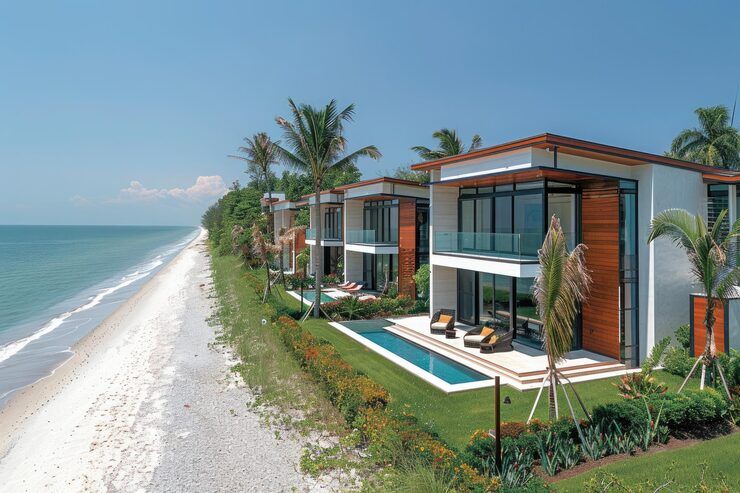
Beachfront cottages are small houses or holiday properties located directly beside a beach or within a short distance of the shoreline. They provide an accommodation option for travelers who want to experience coastal scenery, outdoor recreation, and convenient access to seaside environments.
These properties vary considerably in design and location. Some are traditional wooden cottages in quiet coastal communities, while others are modern holiday homes with open living areas, private terraces, kitchens, and views of the ocean. Their facilities depend on the property, local infrastructure, and the regulations governing the surrounding area.
The term beachfront generally indicates that a property is immediately beside the shoreline, although descriptions can differ between accommodation providers. A cottage described as near the beach may require a walk or drive to reach the water. Understanding this distinction is important when comparing accommodation options.
Understanding Beachfront Cottage Accommodation
Beachfront cottages are commonly found in coastal destinations across North America, Europe, Australia, Asia, and other regions. Their surroundings may include sandy beaches, rocky shorelines, fishing villages, protected coastal landscapes, or established holiday communities.
Unlike conventional hotel rooms, cottages often provide separate living spaces and kitchen facilities. Some are suitable for couples, while larger properties accommodate families or groups.
Common features include:
Bedrooms and separate living areas
Kitchen or kitchenette facilities
Outdoor seating areas
Sea-facing windows or terraces
Walking access to the beach
Parking or nearby transportation
Internet connectivity
Heating, cooling, or ventilation
Not every property includes all these features. Travelers should examine the property description, photographs, location details, and accessibility information before making a reservation.
Types of Beachfront Cottages
Different cottage categories suit different travel requirements.
Traditional coastal cottages often feature compact layouts, local architectural styles, and simple interiors.
Modern beachfront homes may include contemporary kitchens, larger windows, outdoor decks, and energy-efficient systems.
Family cottages typically provide multiple bedrooms, shared living spaces, and practical facilities for longer stays.
Eco-conscious cottages may incorporate rainwater collection, solar power, efficient appliances, or other environmental measures.
Remote coastal cottages are located away from busy towns and may require additional transportation planning because grocery stores, medical facilities, and public transportation can be limited.
Why Beachfront Cottages Matter
Coastal accommodation plays a role in tourism, local economic activity, outdoor recreation, and the use of coastal communities throughout different seasons.
Supporting Different Travel Needs
Beachfront cottages can suit travelers seeking privacy, families requiring separate sleeping areas, and groups planning longer coastal holidays.
Kitchen facilities may allow guests to prepare meals, while living areas can provide space for relaxing during poor weather or spending time together.
The suitability of a property depends on the number of occupants, accessibility requirements, location, available amenities, and the length of the stay.
Connecting Visitors With Coastal Environments
A cottage near the shoreline can make it easier to participate in activities such as:
Beach walking
Birdwatching
Coastal photography
Fishing where permitted
Surfing and swimming in designated areas
Kayaking in suitable conditions
Exploring coastal trails
Observing local marine environments
Coastal conditions vary throughout the year. Strong currents, high tides, storms, and changing temperatures can affect whether particular activities are appropriate.
Understanding the Meaning of Beachfront
Location is one of the most important considerations when researching coastal accommodation.
A property may advertise ocean views without providing direct beach access. Other properties may be separated from the shoreline by roads, dunes, cliffs, private land, or protected habitats.
Travelers should review maps, property boundaries, access routes, and local shoreline rules rather than relying on general descriptions alone.
Comparing Accommodation Features
| Feature | Why It Matters | What to Check |
|---|---|---|
| Shoreline distance | Determines beach access | Map and walking route |
| Bedrooms | Supports group requirements | Sleeping arrangements |
| Kitchen | Helps with meal planning | Available appliances |
| Accessibility | Affects ease of movement | Entrances, stairs, bathrooms |
| Parking | Important in remote areas | On-site or nearby arrangements |
| Weather protection | Supports seasonal comfort | Heating, cooling, insulation |
| Internet connectivity | Relevant for digital activities | Connection availability |
| Safety arrangements | Supports responsible stays | Emergency information and local hazards |
Recent Trends in Coastal Accommodation
During 2025 and 2026, coastal tourism discussions continued to emphasize environmental resilience, climate-related risks, energy efficiency, and more transparent information about vacation accommodation.
Climate Resilience and Coastal Property
Rising sea levels, coastal erosion, flooding, and stronger storm impacts are important considerations for some shoreline communities.
The United Nations' climate and environmental programs have continued highlighting the importance of adapting coastal settlements and tourism infrastructure to changing environmental conditions.
For beachfront cottage operators and travelers, these concerns can affect building maintenance, shoreline access, insurance requirements, and the long-term suitability of particular locations.
The level of risk differs substantially between destinations. A property on an elevated rocky coast may face different hazards from one located beside a low-lying sandy beach.
Energy Efficiency and Sustainable Accommodation
Energy efficiency remains a consideration for coastal accommodation, particularly where properties require air conditioning, heating, water heating, and lighting throughout the year.
Some cottage operators are adopting solar panels, improved insulation, efficient appliances, water-saving fixtures, and waste-reduction measures.
These features can reduce resource consumption, although their environmental benefits depend on the building, local energy sources, maintenance, and actual usage.
Digital Reservation Transparency
Online accommodation platforms increasingly provide structured information about property features, guest capacity, location, house rules, cancellation arrangements, and additional charges.
Travelers should review the complete reservation terms and check whether the displayed price includes applicable taxes, cleaning charges, deposits, or other mandatory amounts.
Because platform policies and local requirements change, the information displayed for a specific property should be checked before confirming a reservation.
Seasonal Travel Patterns
Coastal demand often changes with school holidays, local festivals, weather, and seasonal activities.
Summer can bring higher visitor numbers to many temperate beaches, while some tropical destinations experience different seasonal patterns because of rainfall, monsoons, or cyclone risks.
Travelers should consider seasonal weather and local conditions rather than assuming that every beachfront destination is suitable throughout the year.
Laws and Policies Affecting Beachfront Cottages
The rules governing beachfront accommodation vary by country, state, province, and municipality. Regulations may cover property use, short-term accommodation, building safety, environmental protection, taxation, and shoreline access.
Short-Term Accommodation Regulations
Some jurisdictions require registration, licensing, permits, or compliance with zoning rules before residential properties can be used for short-term visitor accommodation.
Local governments may also establish occupancy limits, noise restrictions, waste-management requirements, parking rules, and fire-safety standards.
Travelers should confirm that the property complies with applicable local requirements when researching accommodation in a regulated destination.
Coastal Development and Environmental Protection
Coastal development can be affected by setback requirements, erosion controls, floodplain regulations, protected habitats, and restrictions on construction near dunes or wetlands.
In the United States, the Coastal Zone Management Act provides a framework for coastal management through federal-state cooperation. Individual states and local authorities implement additional rules that may affect development and land use.
In other countries, comparable national and regional frameworks govern shoreline development and environmental protection.
Beach Access and Property Boundaries
A beachfront property does not automatically grant unrestricted access to every part of the shoreline.
Public beach access rights differ between jurisdictions. Some beaches are publicly accessible, while others have designated access points, seasonal restrictions, or protected sections.
Visitors should respect property boundaries, follow local signs, and avoid entering protected dunes or sensitive habitats.
Safety and Building Requirements
Coastal accommodation may be subject to building standards addressing wind exposure, flooding, fire safety, structural stability, and emergency evacuation.
Before staying in a remote coastal property, travelers should identify the nearest medical facility, emergency contact arrangements, evacuation instructions, and local weather-alert resources.
Tools and Resources for Choosing a Beachfront Cottage
Several digital resources can help travelers compare coastal properties and understand local conditions.
Maps and Location Research
Digital maps help establish whether a cottage is directly beside the shoreline or located farther inland.
Useful features include:
Walking and driving directions
Distance to public beach access
Nearby grocery stores and medical facilities
Public transportation connections
Terrain and elevation information
Nearby coastal trails and landmarks
Satellite imagery can provide additional context, although current access conditions should be verified separately.
Weather and Coastal Safety Resources
Official meteorological agencies provide information about forecasts, storms, rainfall, wind, and temperature.
Depending on the destination, coastal authorities may also publish tide tables, rip-current warnings, flood alerts, and beach safety notices.
Accommodation Comparison Checklist
Before selecting a property, compare:
Exact location and shoreline distance
Total reservation amount and applicable charges
Guest capacity and sleeping arrangements
Accessibility features
Cancellation and deposit policies
Heating, cooling, and internet availability
Parking and transportation
Local regulations and house rules
Weather-related cancellation arrangements
Comparing these details helps distinguish properties with similar descriptions but different practical features.
Frequently Asked Questions
What is the difference between beachfront and ocean-view cottages?
A beachfront cottage is generally located directly beside the shoreline, while an ocean-view cottage may be farther inland or separated from the beach by roads, other buildings, or private land. Travelers should verify the actual location and access route.
Are beachfront cottages suitable for families?
Some are suitable for families because they provide multiple bedrooms, kitchens, and shared living areas. Families should check child-safety features, stairways, beach conditions, nearby facilities, and occupancy limits.
When is the best time to stay in a beachfront cottage?
The best period depends on the destination, climate, and planned activities. Summer is popular in many temperate regions, while tropical destinations may have distinct dry and rainy seasons. Local weather forecasts and seasonal travel information can help guide planning.
What should travelers check before making a reservation?
Important considerations include the exact location, total reservation amount, cancellation terms, property facilities, accessibility, guest capacity, shoreline access, local rules, and recent property information.
Are beachfront cottages affected by coastal regulations?
Yes. Depending on the location, regulations can affect building construction, short-term accommodation, public beach access, environmental protection, and safety requirements. Specific rules vary by jurisdiction.
Conclusion
Beachfront cottages provide an accommodation option for travelers interested in coastal scenery, outdoor recreation, and flexible living arrangements. Their features range from traditional seaside buildings to modern holiday homes, with suitability depending on location, amenities, accessibility, and seasonal conditions.
Recent attention to coastal resilience, energy efficiency, and reservation transparency highlights the importance of evaluating more than appearance alone. Shoreline access, environmental risks, local regulations, safety arrangements, and the complete reservation terms are all relevant considerations.
Using reliable maps, official weather information, local regulations, and detailed property descriptions can help travelers make informed decisions. Responsible coastal accommodation planning also supports the protection of beaches, dunes, marine habitats, and the communities that depend on these environments.