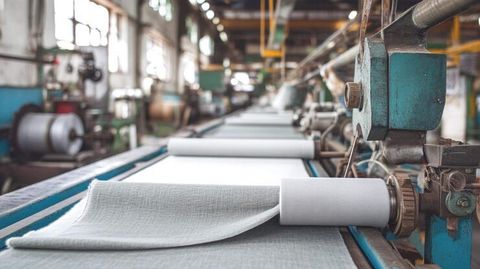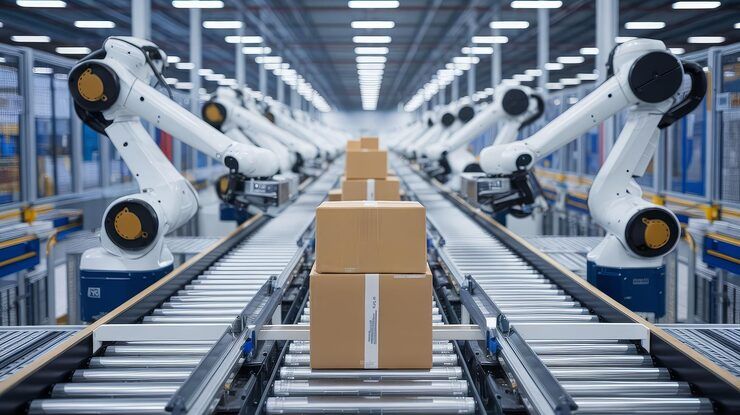
Automated packing lines are integrated industrial systems that prepare products for shipment, storage, or distribution with limited manual handling. They combine machinery, sensors, control software, and material-handling equipment to perform tasks such as filling, sealing, labeling, inspection, carton formation, case packing, and palletizing.
These systems are used across food and beverage production, pharmaceuticals, cosmetics, consumer goods, electronics, and industrial manufacturing. The equipment varies according to the product's size, shape, material, packaging requirements, and production volume.
The main purpose of packaging automation is to make production processes more consistent, coordinate multiple operations, and reduce repetitive manual tasks. A well-designed line can also improve traceability, product protection, and quality monitoring throughout the packaging process.
Understanding Automated Packaging Equipment
An automated packing line is usually made up of several connected machines. Each machine performs a specific operation, while a central control system coordinates timing, product movement, and operating conditions.
A typical line may contain:
Filling machines: Measure and dispense liquids, powders, granules, or other products into containers.
Capping and sealing machines: Close containers or packages to protect their contents.
Labeling systems: Apply product labels, barcodes, batch details, or other identification.
Cartoning machines: Form cartons and place products inside them.
Case packers: Arrange individual products into shipping cartons.
Inspection systems: Identify certain packaging defects or product irregularities.
Robotic pick-and-place systems: Move products between processing stages.
Palletizing systems: Stack cases onto pallets for warehouse handling.
Not every production line needs all these components. A food manufacturer may require automated filling and sealing, while an electronics producer may prioritize protective packaging, product identification, and careful robotic handling.
How an Automated Packing Line Works
Although layouts differ between industries, most systems follow a similar sequence.
Product feeding: Products enter the line through conveyors, feeders, or robotic loading systems.
Primary packaging: Products are placed into bottles, pouches, cartons, trays, or other containers.
Closing and sealing: Packaging is closed using suitable mechanical, thermal, adhesive, or other approved methods.
Labeling and identification: Labels, batch numbers, expiry dates, and barcodes are applied where required.
Inspection: Sensors, cameras, checkweighers, or other inspection equipment examine selected product and packaging characteristics.
Secondary packaging: Individual units are grouped into cartons, cases, or multipacks.
Palletizing and dispatch preparation: Finished cases are stacked, wrapped when necessary, and prepared for warehouse movement.
The control system monitors machine status and coordinates product flow. If a machine stops or a sensor detects an issue, the system may pause upstream equipment, divert a product, or alert an operator.
Why Automated Packing Lines Matter
Automated packaging equipment helps manufacturers coordinate production, maintain consistent packaging standards, and manage increasing product volumes. Its value depends on the product, operating environment, and how effectively the equipment integrates with the wider production process.
Production Efficiency and Consistency
Automation reduces repetitive manual operations and helps maintain predictable production cycles. Connected machines can coordinate filling, sealing, labeling, and case packing without requiring products to be transferred manually between every stage.
However, actual throughput depends on machine speed, changeover time, product characteristics, downtime, and the performance of the complete line.
Quality Control and Product Traceability
Automated inspection systems can identify selected packaging defects, incorrect labels, missing components, and weight variations.
Barcode scanners and vision systems can also support product identification and batch tracking. In regulated industries, these capabilities help manufacturers maintain records and investigate quality problems.
Applications Across Industries
Automated packing lines are used in many manufacturing environments:
Food and beverage packaging
Pharmaceutical packaging
Personal care and cosmetics
Household products
Electronics and electrical components
Agricultural products
Automotive components
Industrial chemicals and materials
Each industry has specific requirements. Pharmaceutical packaging may need strict identification and traceability, while food packaging may require hygienic equipment design and materials suitable for contact with food.
Recent Developments in Packaging Automation
Developments reported during 2025 and 2026 highlight greater interest in robotics, digital monitoring, flexible production, and automated handling at the end of packaging lines.
Robotics and Flexible Automation
Robotic pick-and-place systems and automated palletizers are increasingly used for repetitive handling tasks. Their programmable movements can help manufacturers manage different product shapes, carton sizes, and packaging arrangements.
Collaborative robots, commonly called cobots, can support selected tasks in appropriately designed work areas. Their use still requires a risk assessment because safe operation depends on the robot, tools, surrounding machinery, and intended workflow.
Digital Monitoring and Predictive Maintenance
Modern packaging lines increasingly use sensors, programmable logic controllers, industrial networks, and production monitoring software.
These technologies can record machine speed, stoppages, product counts, temperature, and other operating information. When analyzed properly, the data can help identify recurring faults and maintenance needs before they cause extended interruptions.
Digital monitoring does not eliminate equipment failures. Its effectiveness depends on reliable sensors, suitable software, accurate records, and trained personnel.
Packaging Industry Outlook for 2026
In August 2026, PMMI, the Association for Packaging and Processing Technologies, published its 2026 Packaging State of the Industry report. The report examined industry performance, machinery trends, and forecasts covering 2026–2031.
Its highlighted themes included digital-tool adoption, workforce knowledge retention, equipment retrofits, and end-of-line automation such as robotic palletizers and autonomous mobile robots.
These themes reflect a broader industry focus on improving operational resilience while adapting existing production equipment to changing packaging requirements.
Laws, Regulations, and Industry Policies
Automated packing lines must comply with applicable regulations covering machinery safety, product quality, packaging materials, labeling, and environmental performance. Requirements depend on the country, industry, and products being packaged.
Machinery Safety in the United States
The US Occupational Safety and Health Administration establishes workplace safety requirements for industrial machinery.
Relevant provisions include machine guarding under 29 CFR 1910.212 and hazardous-energy control under 29 CFR 1910.147.
These requirements address hazards such as moving machine parts, crushing points, unexpected equipment startup, and dangerous energy during maintenance. Appropriate safeguards may include physical guards, interlocked access doors, emergency stops, and documented energy-isolation procedures.
European Union Machinery Requirements
In the European Union, machinery placed on the market must comply with applicable machinery safety legislation. Regulation (EU) 2023/1230 on machinery generally becomes applicable from January 20, 2027, replacing the Machinery Directive 2006/42/EC.
Manufacturers and system integrators should confirm which requirements apply to the equipment, its commissioning date, and the relevant conformity-assessment process.
Food and Pharmaceutical Packaging
Food packaging equipment may be subject to hygiene, material-contact, contamination-control, and labeling requirements. In the United States, the Food and Drug Administration regulates applicable food-contact substances and establishes requirements relevant to food manufacturing.
Pharmaceutical packaging can require additional controls for product identification, batch records, packaging integrity, and prevention of mix-ups.
Environmental Packaging Policies
Packaging regulations increasingly address material reduction, recyclability, and producer responsibility. The European Union's Packaging and Packaging Waste Regulation, adopted in 2025, introduces requirements that generally begin applying from August 12, 2026, with some provisions following different schedules.
Manufacturers should assess the rules applicable to their markets rather than assuming that one country's packaging requirements apply worldwide.
Tools and Resources for Packaging Automation
Several technical resources can help manufacturers evaluate equipment and plan packaging operations.
Equipment Selection Checklist
Before selecting an automated packing line, document these requirements:
Product dimensions, weight, and material characteristics
Required production throughput
Packaging format and sealing method
Labeling and traceability requirements
Available factory floor space
Electrical and compressed-air requirements
Cleaning and maintenance needs
Safety and regulatory requirements
Integration with existing conveyors and production systems
Useful Software and Measurement Tools
Tool | Main Purpose |
|---|---|
Production monitoring software | Track output and machine downtime |
CAD layout software | Plan equipment placement and material flow |
PLC programming tools | Configure and monitor machine controls |
Machine vision software | Inspect labels, seals, and product presentation |
Barcode verification systems | Check product identification |
Energy monitoring tools | Measure electricity consumption |
Preventive maintenance software | Schedule inspections and maintenance |
A packaging line's performance can be measured using throughput, reject rate, downtime, changeover duration, and Overall Equipment Effectiveness (OEE).
OEE combines availability, performance, and quality into a single operational measure. It is useful for identifying production losses, but it should be interpreted alongside safety, product quality, and maintenance data.
Frequently Asked Questions
What is an automated packing line?
An automated packing line is a connected group of machines that performs packaging operations such as filling, sealing, labeling, inspection, carton packing, and palletizing with limited manual handling.
Which industries use automated packaging machines?
Food and beverage, pharmaceutical, cosmetics, electronics, automotive, agriculture, and industrial manufacturing are common users. Equipment configurations vary according to product characteristics and regulatory requirements.
Can automated packing lines handle different product sizes?
Yes. Some systems use adjustable guides, programmable settings, changeable tooling, and robotic handling to accommodate different products. The range of supported sizes depends on the machine design and the required changeover process.
How is packaging line efficiency measured?
Common measures include units packaged per minute, downtime, reject rates, changeover duration, and OEE. Results should be measured consistently across comparable production periods.
What safety measures are important for automated packaging machinery?
Important measures include suitable machine guarding, emergency-stop systems, access controls, operator training, risk assessments, and energy isolation during maintenance. Specific requirements depend on the equipment and applicable regulations.
Conclusion
Automated packing lines combine machinery, robotics, sensors, and control systems to coordinate packaging operations across a wide range of industries. They can improve consistency, support product traceability, and reduce repetitive manual handling when appropriately designed and maintained.
Recent developments in robotics, digital monitoring, and packaging-line integration show how manufacturers are adapting equipment to changing production requirements. At the same time, machinery safety, product quality, labeling accuracy, and environmental regulations remain important considerations.
Selecting an appropriate system requires careful assessment of product characteristics, throughput, packaging formats, factory layout, maintenance needs, and applicable legal requirements. A well-integrated packing line balances production performance with reliable operation, worker safety, and consistent packaging quality.